Breaking Down Barriers with Virtual Fence
The fertile lands of the Greater Yellowstone Ecosystem support iconic wildlife and the rancher's livelihoods of countless people.
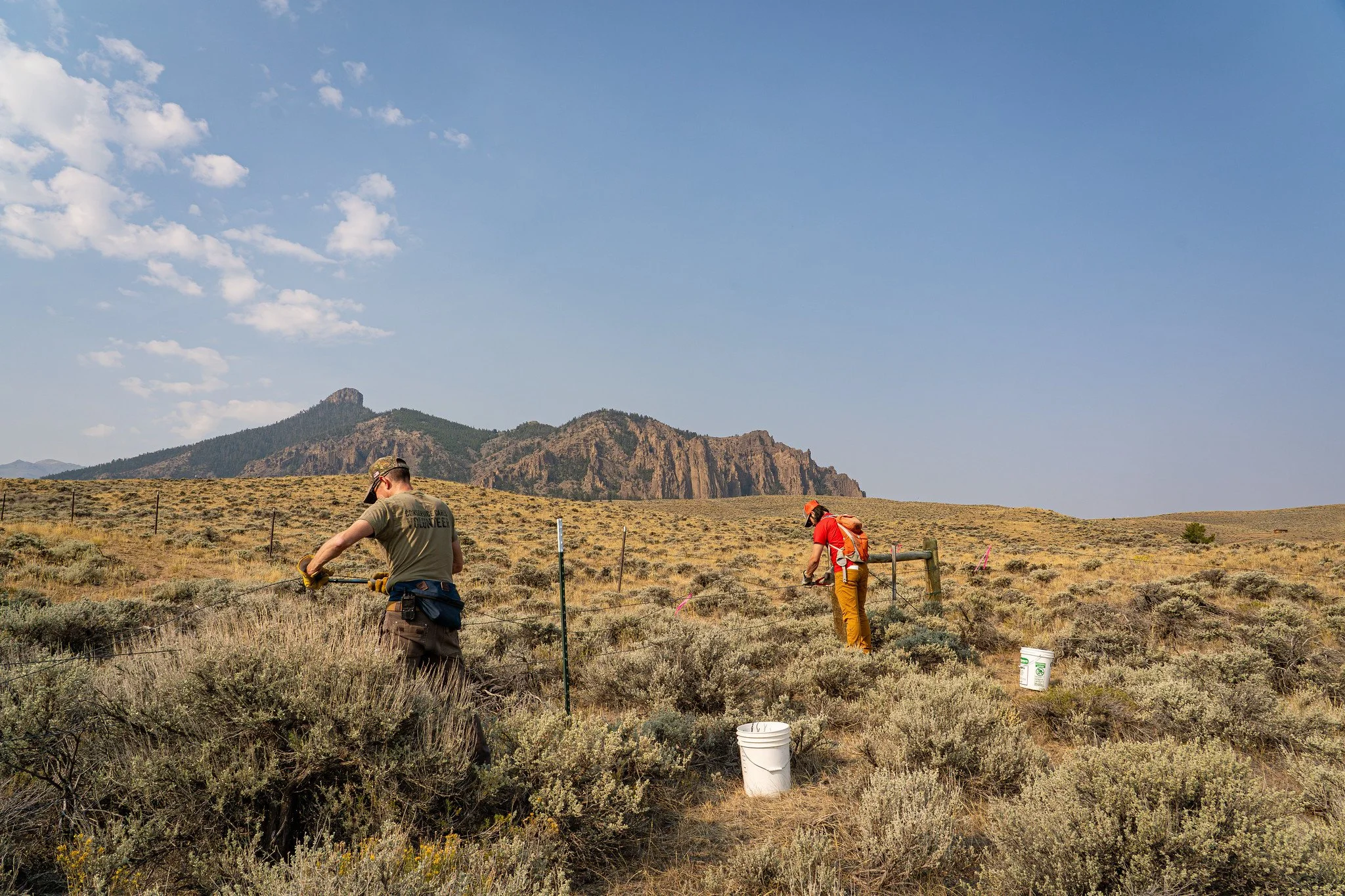
The vast public and private lands that make up Greater Yellowstone are crisscrossed with miles upon miles of fences. While fences aren’t inherently bad—and are often necessary in certain areas to keep wildlife off roads, livestock contained, and property boundaries visible—they create barriers that fragment wildlife habitat. Virtual fence helps to solve this conservation problem by enabling livestock to be fenced off without the need for physical fencing.
This emerging technology is rapidly gaining traction across the Greater Yellowstone Ecosystem.
By enabling precise grazing, real-time livestock location tracking, and virtual herd movement, virtual fence can help livestock producers save time and reduce costs. At the same time, it offers conservation benefits by allowing wildlife to move across the land with fewer physical barriers, keeping livestock out of sensitive habitat areas, supporting rotational grazing that maintains rangeland health, and improving separation between livestock and wildlife such as elk and grizzly bears.
Most people have seen virtual fences for dogs that use collars and a buried cable to keep dogs from running off. The collars administer beeps and small electric shocks within a certain range of that cable that deter the dog from crossing the invisible boundary.
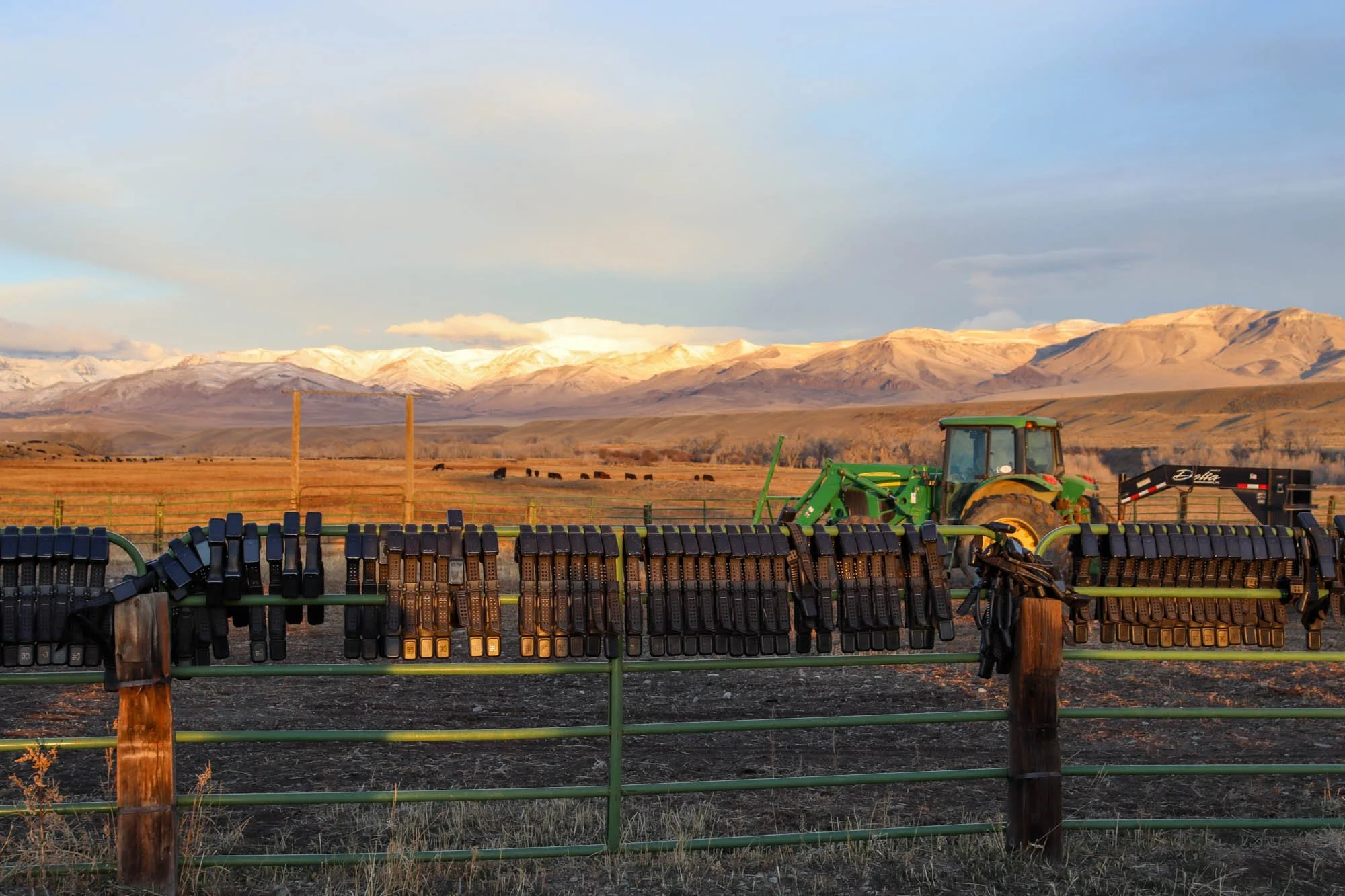
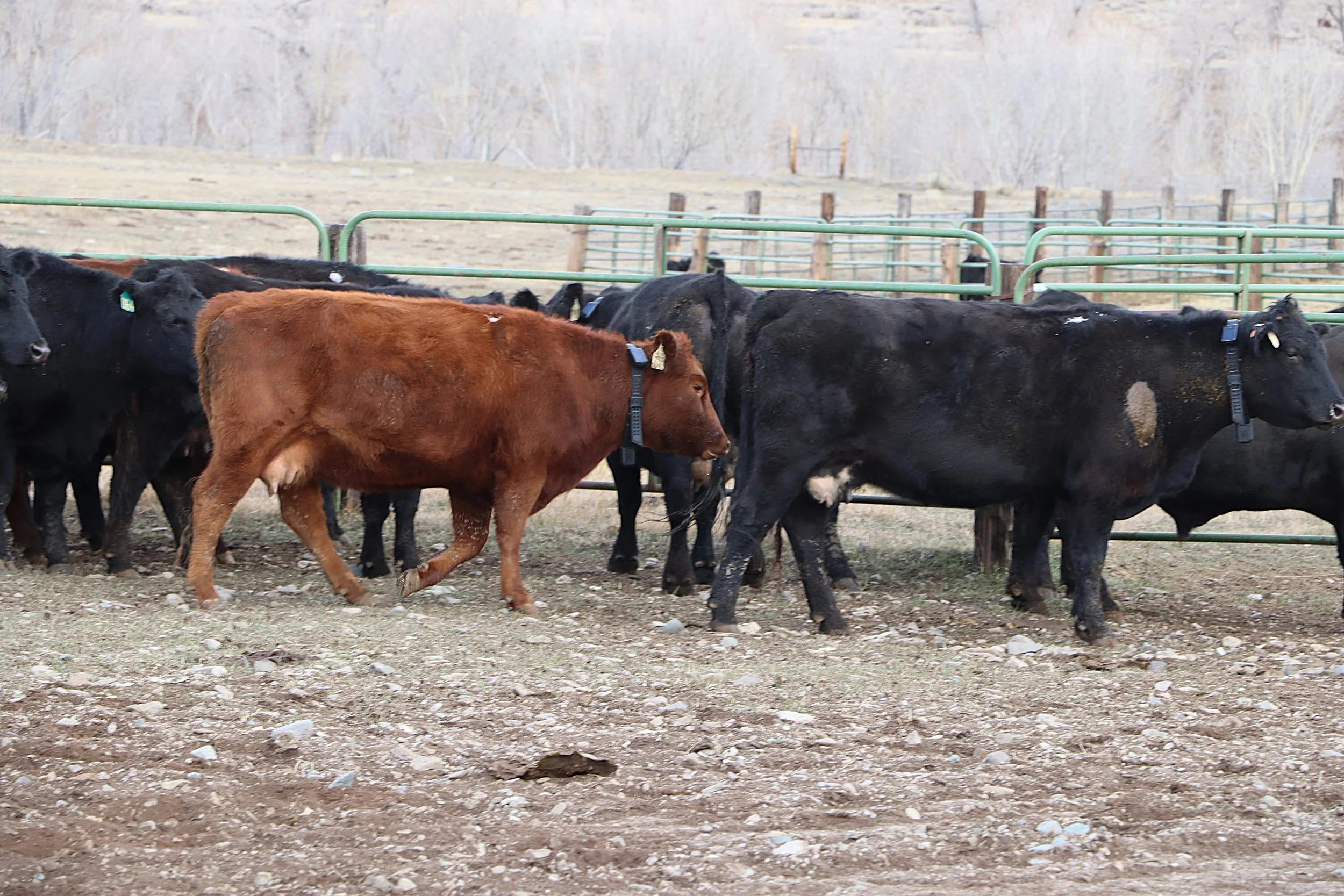
Virtual fencing for livestock works similarly. Livestock wear collars containing a battery-powered transceiver and use GPS, wireless signals, and radio frequency to “talk” to base stations. Cows receive auditory signals that scale up to electric stimuli the closer they get to a virtual boundary established by the livestock manager. The technology allows livestock managers to move their stock without having to physically move fence lines.
Think virtual fence might be a fit for your land? Learn more about available technology, how to secure funding, and more in our Virtual Fence Resource Guide.
Virtual Fence Resource Guide
What is Virtual Fence?
Virtual fencing is a technology that controls livestock movement using GPS-enabled collars that emit auditory and/or electrical cues as the animals approach the boundary set by producers, eliminating the need for physical barriers like barbed wire. The collars are managed remotely via a computer or mobile app, allowing flexible and adaptable grazing management. Animals learn to avoid areas with virtual fences through classical conditioning.
Key Benefits
Flexible management: Boundaries can be changed remotely and quickly to adapt to changing needs.
Labor savings: Can reduce the time spent moving, building, and repairing traditional fences.
Return on Investment: Can be a cheaper alternative to traditional fencing, especially on large properties. Can reduce gathering time, provide quicker location and identification of predation, potentially prevent cow/calf losses during calving, and possibly provide more effective disease transmission management with easier herd movement.
Improved grazing: Can allow for management that optimizes forage utilization and rotational grazing without physical barriers.
Conservation: Can protect sensitive areas, improve soil health and vegetation productivity, bunch cattle for predator conflict mitigation, allow for mimicking wildlife grazing patterns, and remove physical barriers that harm wildlife.
Potential Limitations
Signal and coverage issues: Virtual fences rely on GPS, cellular, and LoRa radio communication signals, which can be unreliable in areas with dense tree cover, steep slopes, or poor cellular service.
High initial cost: There can be a significant upfront cost for the collars and necessary base stations or towers.
Learning curve: There is a learning curve for producers to implement and manage the technology effectively.
Not a “Set-It-and-Forget-It” System: Virtual fencing is a dynamic management tool that requires ongoing attention for tracking battery status, updating boundaries, and monitoring animal behavior and training.
Does not eliminate the need for some existing fence: Boundary fences and fences in high-risk areas, such as along highways, are still needed.
While virtual fences have proven benefits for livestock producers and conservation, it should not be considered a magic bullet. Rather, it is another tool in the toolbox for livestock management. Technology is constantly evolving and improving, and if it isn’t right for your operation now, it could be in the future. Each product is slightly different and doing your homework can save you a lot of headaches in the future.
The conservation and livestock management benefits that virtual fence technology may have are further explored in “Advancing Conservation Through Virtual Livestock Fencing,” an article co-authored by GYC that was recently published in the Biological Conservation journal. The article was led by Drew Bennett, Whitney MacMillan Professor of Practice in UW's Haub School of Environment and Natural Resources, and co-authored by Haub School colleagues Temple Stoellinger and Jacob Hochard, and UW Zoology and Physiology faculty Jerod Merkle and Kurt Smith, along with collaborators at the Property and Environment Research Center, UC Berkeley, World Wildlife Fund, and the Wyoming Wildlife Federation.
Vendor and Product Information
This is not an endorsement of any vendor. Prices are subject to change.
-
https://www.halterhq.com/en-us
Contact: Katie Turner, katie.turner@halter.co.nz, (307) 207-6970
Emery Fine, emery.fine@halter.co.nz, (307) 206-2350
Company Statement: Halter collars use sound and vibrations to contain and move your herds across the range. A low-energy electric pulse, significantly weaker than an electric fence, is used only when cows repeatedly ignore the primary cues, keeping animal welfare our top priority.
Collars: Collars are fully owned by the customer but are on a subscription basis, meaning they do not purchase the collars; they are included with subscription. The annual subscription for Halter is $72/year per collar, with a lifetime warranty. Satellite collars, which don’t require towers, are $92 annually per collar.
Batteries: Halter collars are solar charged, eliminating the need to change batteries.
Base Stations/Towers: Towers are $4,500 each. A Halter specialist will work with you to determine the number of towers appropriate for your operation.
-
Contact: sales.us@nofence.no
Company Statement: Nofence is the world's first virtual fencing system for livestock, combining GPS collars with an app to make grazing management simple. The system works well in areas with low to great cell coverage and is designed to scale with you as your operation changes. Key features include the ability to easily create, adjust, and move pastures; set exclusion zones to keep animals out of specific areas, track individual animals, access activity data and Herd Replay, and add multiple users with different access levels.
Collars: Collars are fully owned by the customer. Cattle collars are $349/each for 5–24 collars, $309/each for 25–99 collars, or call for pricing on orders of 100 or more, with the first year's subscription included. Sheep and goat collars are $269/each for 5–24 collars, $239/each for 25–99 collars, or call for pricing on orders of 100 or more, with the first year's subscription included. After the first year, all collars are automatically enrolled in a subscription with ongoing monthly or yearly costs based on the number of collars in use and whether they are used all year or for a select number of months. All collars have a 5-year warranty and a money-back guarantee.
Batteries: Nofence collars use built-in solar panels to extend the life of their rechargeable batteries. Cattle collar batteries typically last a full year before needing a charge, while sheep and goat collar batteries typically last 5–9 months. Battery life may vary depending on grazing intensity, pasture size, sunlight, and cell coverage. You can easily check battery levels in our app and swap them out — no tools needed.
Base Stations/Towers: N/A; GPS & cell service only
-
https://am.gallagher.com/solutions/eshepherd/home
Contact: Customer Engagement - Jacey Ellsworth, Jacey.Ellsworth@gallagher.com, 605-787-3123
Company Statement: eShepherd™ is a solar powered, GPS enabled, livestock neckband that enables you to track, fence and move your livestock around your farm using virtual boundaries. Simply draw your virtual fence anywhere on your property, and your cattle are trained to remain within the virtual barrier. eShepherd offers web and mobile apps. The system creates a 6ft wide virtual line on the ground for precise grazing.
Collars: Collars are fully owned by the customer. Cost varies by volume, but the average cost is $250/collar.
All hardware, including neckbands, solar panels, and base stations, comes with a three-year warranty. If needed, devices are refurbished or replaced. Outside the warranty period, maintenance is minimal, typically limited to replacing straps or clips.
Batteries: eShepherd collars are solar charged, meaning no need to change batteries on a regular basis. Batteries have a 7+ year lifespan.
Base Station/Towers: eShepherd has both cellular and base station systems. If base station/s are necessary, they are $6,000/station.
-
Contact: Cuinn Merrigan, Senior Territory Manager, cuinn.merrigan@merck.com
Company Statement: Vence is built for hard to fence, extensive areas. A single Vence base station can cover 7,500+ acres depending on topography, and we have had huge success/great efficacy in places with limited cellular service because our collars run on Lora WAN with two-way communication to check in with the base station, not needing cellular service to talk to the base station. We have a fantastic Rancher Success Team who are there for onboarding ranchers, training cattle, and any needs for their Vence use.
Collars: Collars have a lifetime warranty and are leased at $50/cow for an annual subscription, which includes the battery.
Batteries: Extra batteries are $10/battery.
Base Station/Towers: Base stations are $10k for self-install, $12k for the Vence team to install it with a 3-year warranty.
Funding Opportunities
Funding for virtual fence is often available from a variety of sources. Each opportunity has its own requirements and application process. This is not a guarantee of funding. Opportunities may end at any time at the sole discretion of the funding organization.
Non-Governmental Organizations
-
https://www.perc.org/virtual-fence-conservation-fund/
Contact: Travis Brammer, Director of Conservation, tbrammer@perc.org
Funding Opportunity: PERC offered a virtual fence fund in 2025 and 2026. They anticipate being able to offer another round of funding in the future. Applications are competitive, but do not have a geographic restriction.
-
https://rickettsconservation.org/tag/press-release/
Contact: Shari Meeks, Project Manager, smeeks@rickettsconservation.org
Funding Opportunity: The Ricketts Conservation Foundation has provided financial incentives for the adoption of virtual fence resulting in conservation outcomes in the Yellowstone Ecosystem. Our first competitive grant opportunity was offered in 2025. Wildfire Contingency funding is currently available. Additional funding opportunities are currently in development.
-
https://www.plankstewardship.org/
Contact: Milward Simpson, Executive Director, milward.simpson@plankstewardship.org
Funding Opportunity: The Plank Stewardship Initiative provides financial resources to organizations that can assist us in fulfilling our mission to help farmers and ranchers in the Northern Great Plains of eastern Wyoming and Montana to enhance their business skills and economic sustainability, enter into successful succession planning for their operations, and further their efforts to conduct conservation-friendly, sustainable rangeland management.
-
Contact: Tomer Hasson, Senior Program Officer, tomer.hasson@americaslands.org
Funding Opportunity: The Foundation is working to support virtual fence education as well as implementation for permittees utilizing BLM land. Project proposals and requests should be submitted through your local BLM field office.
-
https://www.worldwildlife.org/places/great-plains/sustainable-ranching-initiative/
https://www.worldwildlife.org/places/great-plains/sustainable-ranching-initiative/ranch-systems-and-viability-planning-rsvp/
Contact: Alexis Bonogofsky, Director Sustainable Ranching Program, alexis.bonogofsky@wwfus.org
Funding Opportunity: World Wildlife Fund’s (WWF) Sustainable Ranching Initiative (SRI) is partnering with ranchers across the Northern Great Plains (NGP) to increase sustainable grassland management on one million acres in five years. Through the Ranch Systems and Viability Planning network (RSVP), WWF has established a comprehensive support system for ranchers to develop sustainable grazing management plans with assistance from on-the-ground technical specialists and to access continuing education to improve ecological outcomes at scale in the NGP.
Landowners in the RSVP program can apply for funding in the form of cost-share for ranch improvements. This is intended to encourage increased adoption of sustainable grazing practices in the NGP. Project costs are expected to be shared with the rancher and/or additional contributing partners, if applicable. Currently, the standard for cost-share projects is that WWF will pay up to 50% of the balance of the total project cost not covered by the rancher and or contributing partner, with a maximum of $60,000 per ranch.
Government Agencies
-
https://www.nrcs.usda.gov/programs-initiatives/environmental-quality-incentives-program
Contact: NRCS district office for your area. https://offices.sc.egov.usda.gov/locator/app
Funding Opportunity: In Wyoming, NRCS offers cost share for virtual fence through its Environmental Quality Incentives Program (EQIP). Applications are competitive and must be submitted through an NRCS office.
-
Contact: Find your conservation district below
Wyoming Conservation Districts: https://conservewy.com/conservation-districts/
Montana Conservation Districts: https://macdnet.org/conservation-district-map/
Idaho Conservation Districts: https://www.iascd.org/
Funding Opportunity: Your local conservation district may have programs or grants to assist with virtual fence implementation. Opportunities vary by location.
-
https://www.fws.gov/program/partners-fish-and-wildlife
Contact: Tim Kramer, Wyoming Lead, Timothy_Kramer@fws.gov, 307-286-7888
Funding Opportunities: The Partners for Fish and Wildlife Program provides free technical and financial assistance to landowners, managers, tribes, corporations, schools and nonprofits interested in improving wildlife habitat on their land. Our staff provide free technical and financial assistance to plan, design, supervise and monitor customized habitat restoration projects. These projects range in size from a wetland of a few acres to a grassland restoration covering several hundred thousand acres.
Other Funding Sources
-
Contact: Ben Veres, Senior Director, ben.veres@cultivo.land
Ford Smith, Sales Manager, 406-223-7814, ford.smith@cultivo.land
Funding Opportunity: Cultivo unlocks your land’s potential. We partner with ranchers to provide soil sampling and ranch advisory, and we pay for upfront costs including virtual fencing and other tech or infrastructure. We empower ranchers to establish a new income stream through carbon credits and other nature-based programs, while at the same time improving land health and productivity.
-
Contact: Hunter Jones, Rancher Sales, hunter.jones@buildgrassroots.com
Funding Opportunity: Regenerative grazing rebuilds soil health and improves ranch productivity while strengthening the land for future generations. Grassroots Carbon partners with ranchers to generate income from carbon stored in healthy soils, rewarding their stewardship and supporting long term resilience.
-