The Roadless Rule: From Record Public Support to Rapid Repeal
Some of the wildest, most pristine forests in the Greater Yellowstone Ecosystem are at risk under a proposal by the U.S. Department of Agriculture to roll back the 25-year-old Roadless Area Conservation Rule. These forests are the source of our drinking water, critical habitat for iconic wildlife, and the heart of our outdoor recreation heritage.
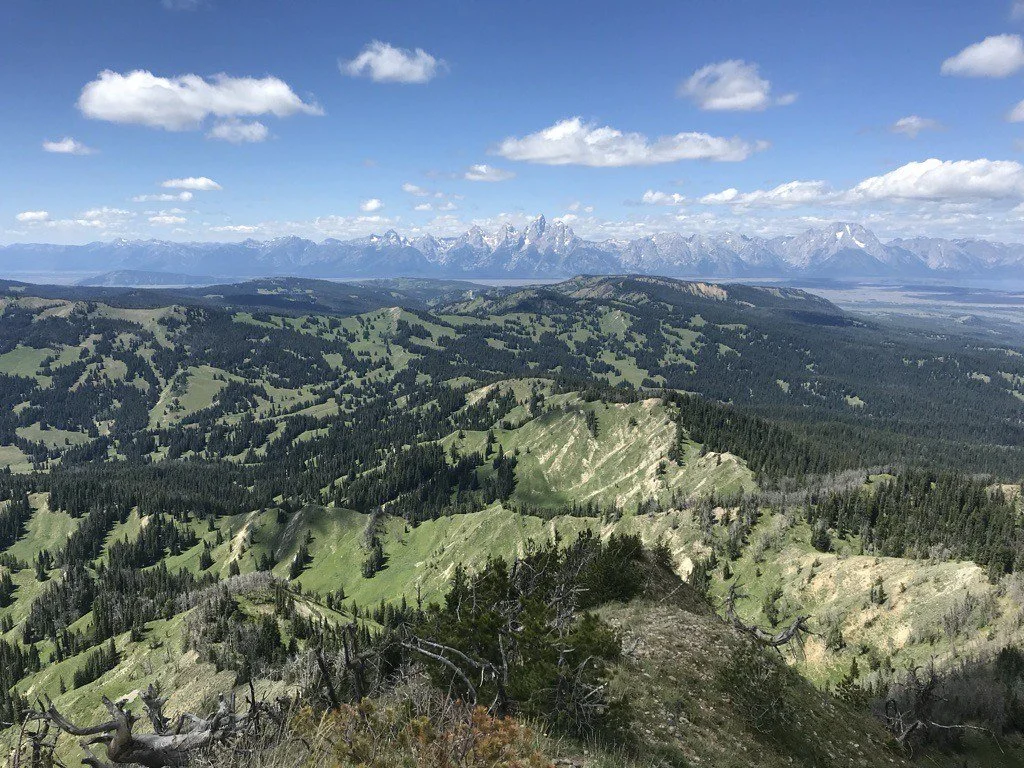
The view from Mt. Leidy, a roadless area in the Bridger-Teton National Forest. Photo GYC/Teddy Collins
The proposed rollback would weaken protections for nearly 10 million acres of roadless national forest lands in Montana and Wyoming, with millions more at risk nationwide.
When the Roadless Rule was adopted in 2001, it followed one of the most robust public engagement processes in U.S. history. Over nearly four years, the federal government hosted more than 600 public meetings across the country and received a record-setting 1.6 million public comments—an overwhelming majority of which were in support of protecting roadless forests.
In stark contrast, the USDA initiated the current rescission process in August with a 21-day comment period and no public meetings.
Before decisions are made that could permanently alter these irreplaceable landscapes, the American public deserves a meaningful opportunity to be heard. We urge the USDA to host in-person public meetings across Montana, Wyoming, Idaho, and nationally before moving forward with any proposal to weaken the Roadless Rule.
Why Public Meetings Are Essential:
Our wildest forests are at stake. Roadless areas represent some of the last remaining undeveloped national forest lands. In Montana and Wyoming alone, nearly 10 million acres have remained intact because they are protected from roadbuilding and large-scale industrial development. Once roads are built, these places are permanently altered.
Roadless areas fuel our outdoor recreation economy. Protected forests support world-class hunting, fishing, hiking, paddling, climbing, and camping. Outdoor recreation generates nearly $6 billion annually in Montana and Wyoming. Nationally, roadless areas safeguard tens of thousands of miles of trails, iconic climbing routes, whitewater rivers, and major national scenic trails that drive local economies and support rural communities.
Taxpayers cannot afford more forest roads. The Forest Service already manages a 380,000-mile road system—twice the length of the U.S. highway network—and faces billions of dollars in deferred maintenance. Building new roads in remote forest areas would deepen this backlog and further burden taxpayers.
More roads mean higher wildfire risk. Research shows wildfires are four times more likely to start in areas with roads than in roadless forests. More than 90 percent of U.S. wildfires ignite within a half mile of a road. Weakening roadless protections would increase ignition risk, threatening nearby communities, firefighters, and public safety.
Roadless forests protect clean drinking water. National forests provide drinking water to more than 60 million people in 3,400 communities. Road construction is a major source of sediment and pollution in waterways. Protecting undeveloped forest headwaters is essential for maintaining safe, reliable drinking water supplies nationwide.
The Roadless Rule is proven, popular, and flexible. The rule remains one of the most successful and widely supported conservation policies in U.S. history. It already allows exceptions for wildfire response, flood recovery, community access, and forest stewardship activities such as habitat restoration and prescribed burning. Many challenges cited by rollback proponents stem from outdated Forest Plans—more than half of which are 30 to 40 years old. Updating these plans would provide opportunities for local input and modern solutions without sacrificing core protections for roadless lands.
Wildlife depends on intact, connected habitat. Roadless areas provide critical habitat and migration corridors for elk, mule deer, grizzly bears, wolves, birds, fish, and countless other species. Roads fragment landscapes, disrupt migrations, and degrade habitat. Keeping these forests intact is essential for healthy wildlife populations.
This proposal echoes past attempts to sell off public lands. Americans have overwhelmingly rejected efforts to sell off or privatize public lands. Opening protected wildlands to roadbuilding and industrial development is just as harmful—and just as disconnected from what the public wants for its shared lands. Even the timber industry is not asking for this change; it already has access to more than 100 million acres of forest available for logging.
Communities and cultures are at risk. Expanded industrial activity threatens culturally important sites and subsistence areas vital to Tribal communities for food, medicine, and traditional practices. These lands hold deep cultural significance that cannot be replaced once lost.
GYC and more than 1,600 of our supporters have already called on the USDA to host in-person public meetings across Montana, Wyoming, and other affected states before making any changes to the Roadless Rule. The public spoke clearly in 2001—and we deserve the chance to speak again.
Our roadless forests are a national legacy. We urge the USDA to uphold transparent decision-making and ensure the voices of the American people are heard. You can stand up for these remarkable public lands by adding your name to our petition.

– Sally Schrank, Montana Conservation Manager [Bozeman, MT]