Neighbors Come Together to Make Madison Valley Roads Safer for People and Wildlife
Southwest Montana’s Madison Valley is more than breathtaking landscapes and open roads—it's home. Ranchers and rural families have worked these lands for generations, outfitters and guides have built their livelihoods here, and visitors from around the world come to experience its extraordinary wildlife and world-class recreation.
The valley's expansive public and private lands support some of America’s best wildlife habitat that many of the Greater Yellowstone Ecosystem's herds of elk, pronghorn, and mule deer rely on.
But Montana has the second-highest rate of wildlife-vehicle collisions in the nation—a driver in Montana has a 1 in 53 chance of hitting an animal each year, and wildlife collisions account for 10 percent of all reported crashes statewide, double the national average. In the Madison Valley, US Highway 287 and Montana Highway 87 reflect that reality.
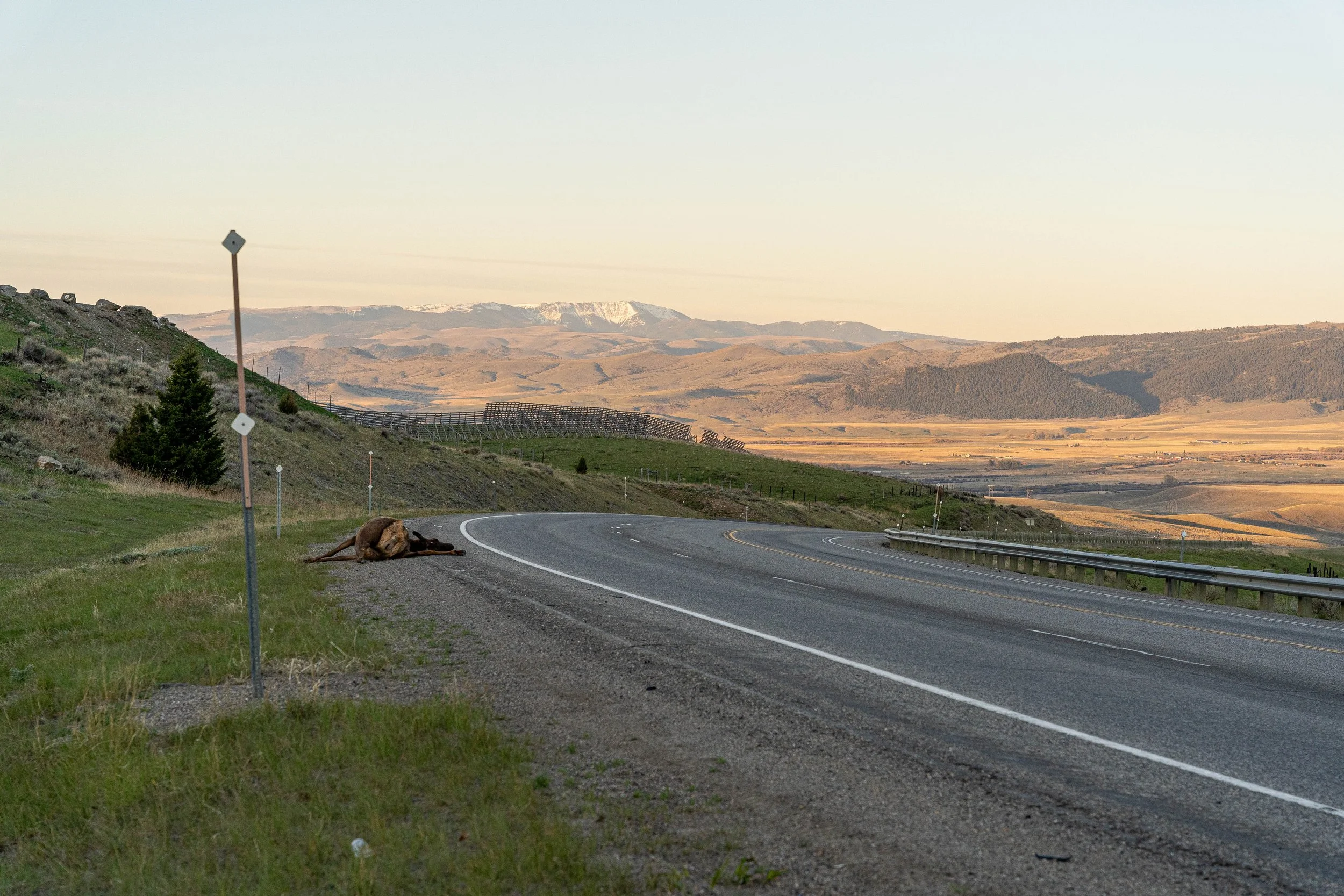
An elk that was killed in a wildlife-vehicle collision in the Madison Valley. Photo Rick Hutton.
High speeds, open lands, and active migration routes make this corridor especially dangerous. Between 2014 and 2025, roughly a third of all reported crashes on these highways involved wildlife, resulting in a documented 1,508 dead animals. Documented carcass counts alone underestimate the true toll—the actual number of collisions is likely closer to 3,500.
The costs add up. Conservative estimates put the price of wildlife-vehicle collisions in the valley at more than $35.7 million during the same decade. As traffic and development continue to grow, these risks will only increase.
That’s why neighbors in the valley have come together to form Madison Passages, a community-based coalition launched in September 2025 to improve highway safety for people and wildlife.
Madison Passages grew out of conversations among ranchers, residents, local businesses, and conservation partners who share these roads and care deeply about this place. It is led by the community, and its approach is grounded in local knowledge, priorities, and support. The group’s goal is to reduce wildlife-vehicle collisions while maintaining the connectivity wildlife need to reach food, water, breeding areas, and winter habitat.
The partnership includes the Madison Valley Ranchlands Group, Henry’s Fork Wildlife Alliance, Center for Large Landscape Conservation, National Parks Conservation Association, and residents of the Madison Valley.
The Greater Yellowstone Coalition has been proudly supporting this effort, but Madison Passages belongs to the people who live, work, and drive on these roads every day. The solutions that will work best in the Madison Valley are the ones shaped by the people who know it best. When we work together, we’re greater.
Addressing wildlife-vehicle collisions starts with awareness and community-driven action. Madison Passages envisions a future where collisions are rare, highways no longer pose major barriers to wildlife movement, and the people who live, work, and recreate in the valley continue to work together to protect the safety, connectivity, and character that make the Madison Valley so special.
Please consider joining GYC’s digital community to stay up to date on projects like this.

– Erin Steva, Montana Conservation Associate [MT]