Episode 40 | Frozen Assets: Why Greater Yellowstone Needs Snow
Having trouble listening? Listen on Spotify or Apple Podcasts instead.
If you live in the Greater Yellowstone Ecosystem, or have visited during the winter months, you know just how absolutely magical this place is with a thick blanket of snow. Some of my favorite moments out in the ecosystem are in Yellowstone with some cross-country skis strapped to my feet, admiring the sparkling diamond dust in the air and identifying animal tracks in the snow.
Whether you’re out skiing, snowshoeing or admiring it from your cozy fireplace window, a snowy winter in the Greater Yellowstone Ecosystem is the best.
Snow plays a more crucial role in this ecosystem than you could imagine. Between 70-80 percent of our water comes from snowpack in the West. When the snowpack in the mountains of the Greater Yellowstone Ecosystem and across the West melts in the spring, it feeds the rivers that provide drinking water for millions of people across the country, and irrigation water for the agricultural industry. Snow is big business – the ski industry alone is a $5 billion industry. Many iconic, cold-loving wildlife species also rely on consistent snowpack to form their winter habitats.
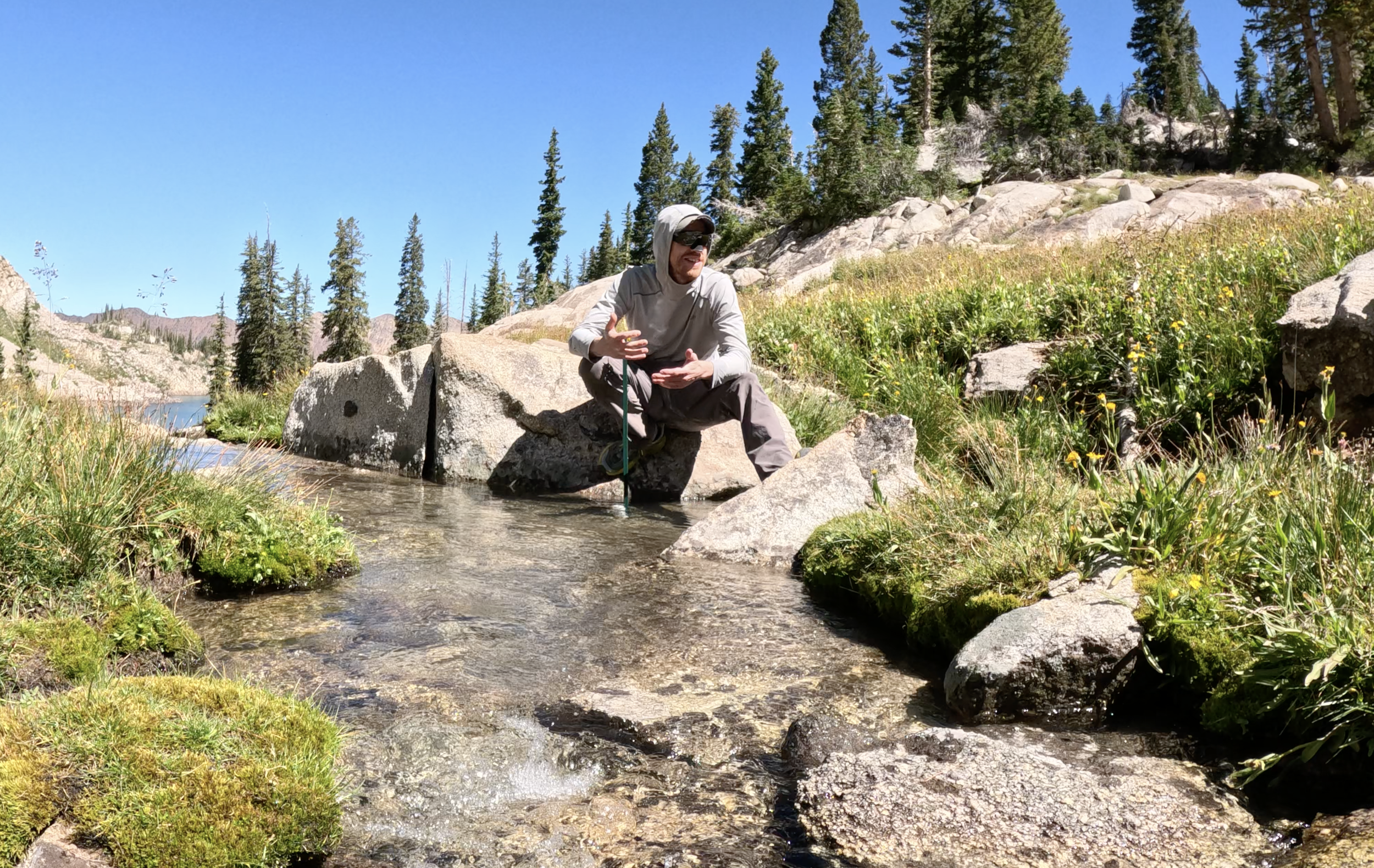
Dr. Scott Hotaling in the field (Photo Scott Hotaling)
The worrisome thing is we’re losing our snow. The amount of snow falling each year is on the decline, and scientists agree that a changing climate plays a lead role. When you hear about drought across the West, it’s often from lack of snowpack in the mountains or too much snow melting too early, leaving little runoff left for the hot late summer months. A drier future seems inevitable, so what can we do about it?
Luckily, many smart and determined people are working toward building a resilient Greater Yellowstone Ecosystem and beyond. Today, we’re chatting with Dr. Scott Hotaling out of Utah State University’s Department of Watershed Sciences. A leading expert in mountain ecology and hydrology, Scott and his team focus on how the cryosphere—Earth’s collection of frozen water—is changing and how these changes are impacting downstream environments. He’s been working in the Teton Mountains for over a decade studying rock glaciers, which are an exciting ray of hope.
The Greater Yellowstone Ecosystem is the land of 49+ Indigenous Tribes who maintain current and ancestral connections to the lands, waters, wildlife, plants, and more.
Voices of Greater Yellowstone was created by the Greater Yellowstone Coalition, a conservation nonprofit dedicated to working with people to protect the lands, waters, and wildlife of the Greater Yellowstone Ecosystem, now and for future generations.
> Listen on Apple Podcasts, Spotify, or wherever you get podcasts.
> Join our Online Community and Receive Two FREE Stickers
> Mountain Futures YouTube Channel
> GYC's Climate and Water Work
> Donate to the Greater Yellowstone Coalition
Podcast Artwork > Rachel Dunlap Art
Music > Redwood Trail by Audionautix is licensed under a Creative Commons Attribution license (https://creativecommons.org/licenses/...)
Thumbnail Photo > NPS
Join Scott on a Journey to a Rock Glacier in Grand Teton!
Thanks for listening in!

-Emmy Reed, Senior Digital Communications Associate (Bozeman, Montana)