For more than 40 years, the Greater Yellowstone Coalition has worked to ensure grizzly bears thrive across the Greater Yellowstone Ecosystem. Once nearly lost from the lands surrounding Yellowstone National Park, grizzlies in the region now thrive and have expanded into places they haven’t been seen for more than a hundred years—representing a once-in-a-lifetime conservation success story.
Decades of commitment by state and federal agencies, communities, and organizations have made that success possible. And yet our work is not done. Greater Yellowstone Coalition’s commitment continues as grizzlies face increasing pressure from habitat loss, conflicts with people, and political whims. These challenges require persistent attention, thoughtful collaboration, and science-based management that ensures the long-term health of grizzly bear populations, while balancing the livelihoods and safety of communities living alongside bears.
The lands across the Greater Yellowstone Ecosystem are managed by a mosaic of federal, state, and local entities, Tribal governments, and private landowners, each with an important role in shaping the future of grizzly bear conservation. GYC works to build consensus across this diverse network, supporting management frameworks that protect core habitat, prevent conflicts, and support linkage between stable populations to ensure the recovery success we’ve seen remains durable over the long term.
This past year, your support made a real difference. Across the ecosystem, we advanced conflict-prevention strategies, strengthened partnerships with agencies and communities, and invested in practical tools that help people and bears thrive on shared landscapes.
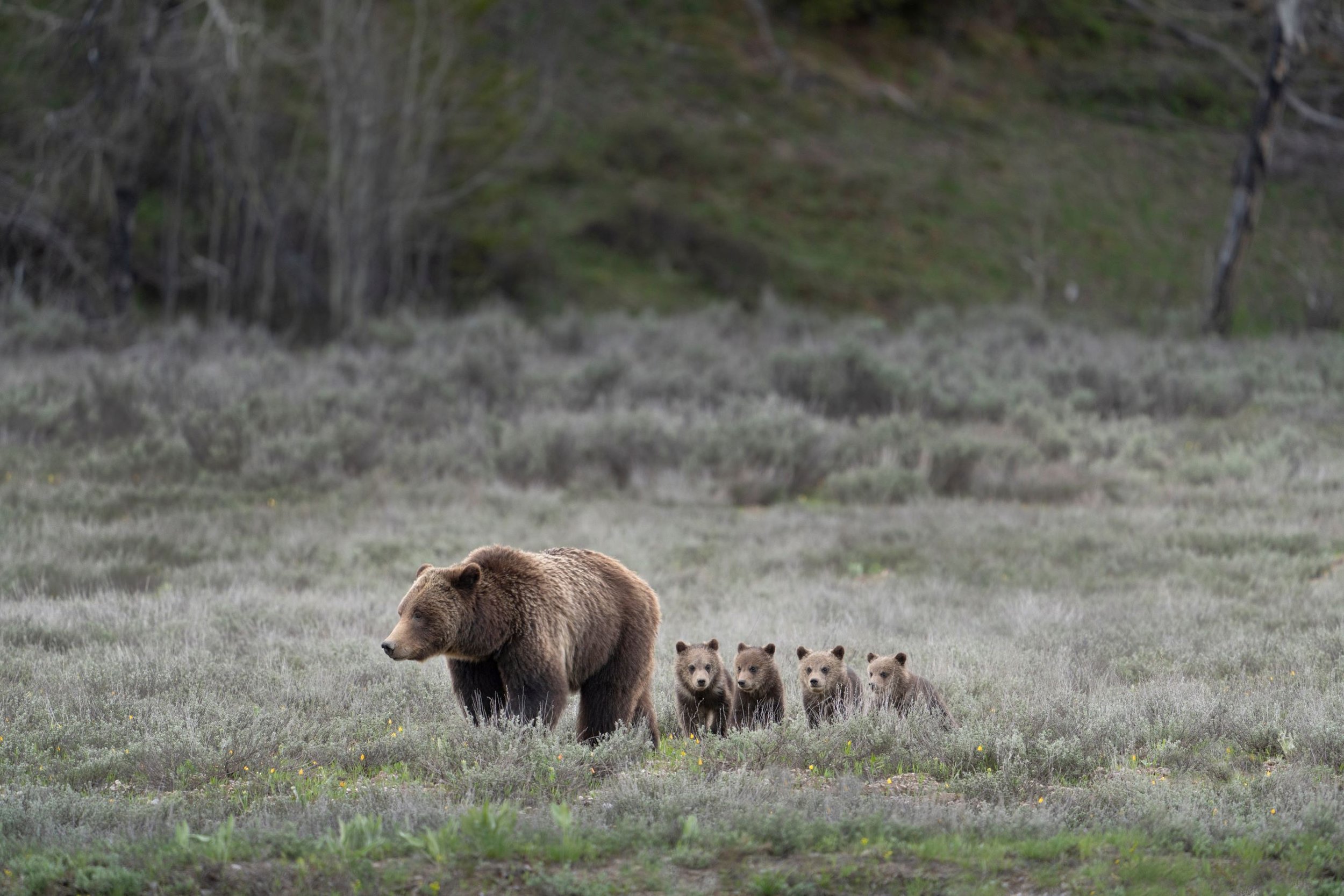
A grizzly bear and her four cubs in Grand Teton National Park. Photo Danita Delimont/Shutterstock
Wyoming
In Wyoming, we expanded our long-standing partnership with Wyoming Game and Fish to strengthen the state’s carcass removal program—an effective tool for reducing attractants and preventing conflicts before they start. We also continued supporting volunteer ambassadors on the Shoshone National Forest to educate visitors on bear safety.
Additionally, we bolstered research to test innovative technologies aimed at reducing livestock depredations, advancing solutions that benefit both ranchers and bears.
Idaho
In Idaho, we partnered with Teton County to support implementation of the county’s bear-conflict reduction ordinance. This wide-ranging effort includes public education, increasing access to bear-proof trash options, and developing stronger planning tools.
Additionally, we helped fund Idaho Fish and Game’s grizzly monitoring and outreach programs—helping assess conflict areas, expand community outreach, support social tolerance for grizzlies, and further research and monitoring of Idaho’s grizzly populations.
Montana
In Montana, we invested deeply in community-level infrastructure and partnerships. We helped upgrade trash sites and campgrounds with bear-resistant infrastructure, supported range rider programs operated by the Centennial Valley Association and the Tom Miner Basin Association, and continued our cost-share partnership with Wildlife Services for range riding in the Gravelly Mountains.
We also partnered with researchers at Colorado State University to study grizzly–cattle interactions in the Gravelly Range, generating insights that inform practical conflict-prevention strategies on working lands. Additional efforts included campground and secure-habitat improvements with the Forest Service, electric fence support and green box enhancements in Paradise Valley, and ongoing Bear Aware programming near Yellowstone’s North Entrance.
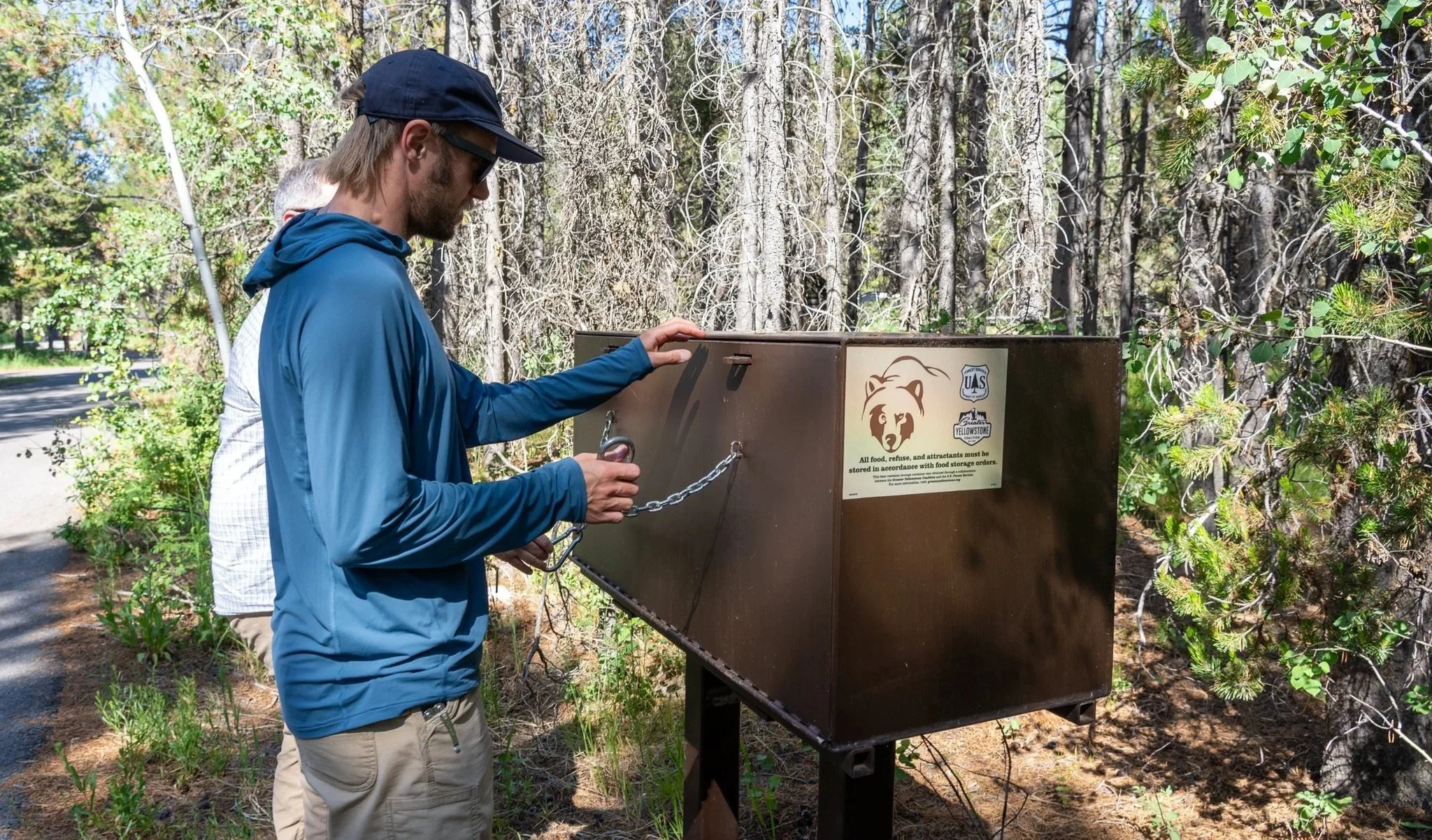
A bear bin at the Buffalo Campground on the Caribou-Targhee National Forest near Island Park, Idaho. Photo GYC/Julia Barton
Ecosystem-Wide Efforts
Across all five national forests of the Greater Yellowstone Ecosystem, we partnered with land managers to improve food storage compliance and prevent conflicts between people and bears. This included installing bear-resistant food storage containers at campgrounds and supporting closed road rehabilitation projects, each mile of which restores roughly 400 acres of secure habitat for grizzlies.
Grizzly bear conservation is complex, but the path forward is clear: conflict prevention, habitat protection, science-based management policies, and collaborative leadership drive success. Living with grizzlies is not always easy, but it is a point of pride for those who do. Thankfully, there is a wide array of tools that can support people and bears in successfully sharing these landscapes.
Your partnership—along with the commitment of communities, agencies, and landowners—proves that conservation moves fastest when we move together. In 2025, through dozens of individual actions, we collectively strengthened the foundation for a healthy future for grizzly bears. We look forward to continuing these efforts in the new year.
Thank you to the Donald J. Slavik Family Foundation, the Harder Foundation, the Richard King Mellon Foundation, the Shipley Foundation, and The Volgenau Foundation for generously helping to fund these efforts.

– Brooke Shifrin, Wildlife Program Manager [Bozeman, MT]