Having trouble listening? Listen on Spotify or Apple Podcasts instead.
Medusahead. Black Henbane. Dyer’s woad. Ventenata. Yellow starthistle. Heavy metal bands, or noxious weeds found in the Greater Yellowstone Ecosystem?
We’re all pretty familiar with the common weeds that make their appearance in our yards and hometowns. Despite their status, I’m still a fan of dandelions. But what makes a noxious weed, a noxious weed?
It’s a surprising issue found here in the Greater Yellowstone Ecosystem. Conservation topics like the politics of grizzly bears or the increase of wildfires get top billing in the media, while noxious weeds are more of an under-the-radar threat.
Well, we’re here to change that and share why you should be aware of noxious weeds in Greater Yellowstone and how you can help prevent their spread. Spoiler alert: humans are of course, the top spreaders of noxious weed seeds.
Joining us today is Bethany Allen, wildlife habitat director at Park County Environmental Council in Livingston, Montana.
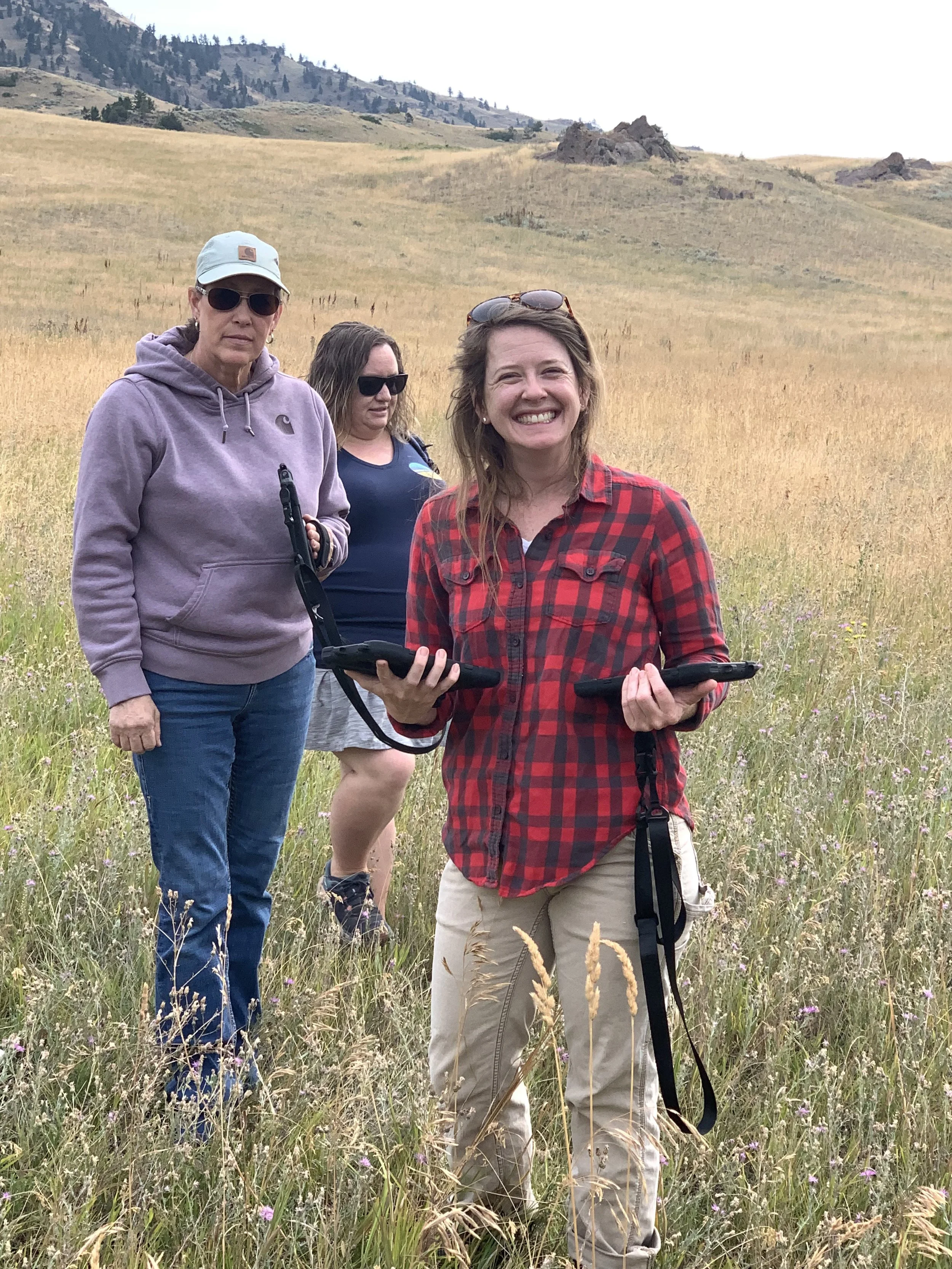
Bethany Allen (right) on a field day in Montana. (Photo Bethany Allen)
Bethany works at the intersection of wild and working lands, translating scientific data into tangible stewardship projects like habitat enhancement and ecological monitoring. She equips her community with the technical resources, hands-on tools, and collaborative networks needed to turn landscape-scale threats into proactive, science-based solutions.
A University of Montana graduate in Resource Conservation, Bethany’s expertise includes post-fire forest recovery, invasive species management, efficacy monitoring, and human-wildlife interaction. Most recently, she partnered with MSU and the Park County Cooperative Management Area to lead county-wide monitoring and education—work that resulted in the development of the statewide Montana Noxious Weed Monitoring Toolbox, now housed with the Montana Department of Agriculture.
We’ll discuss how noxious weeds are dramatically affecting both terrestrial and aquatic habitats, why noxious weeds like cheatgrass are so hard to stop from spreading, and her top three species she would make disappear with her magic wand.
We’ll try to stay out of the weeds—while talking about weeds!
The Greater Yellowstone Ecosystem is the land of 49+ Indigenous Tribes who maintain current and ancestral connections to the lands, waters, wildlife, plants, and more.
Voices of Greater Yellowstone was created by the Greater Yellowstone Coalition, a conservation nonprofit dedicated to working with people to protect the lands, waters, and wildlife of the Greater Yellowstone Ecosystem, now and for future generations.
> Listen on Apple Podcasts, Spotify, or wherever you get podcasts.
> Join our Online Community and Receive Two FREE Stickers
> Montana Noxious Weeds Resource
> Wyoming Noxious Weeds Resource
> Idaho Noxious Weeds Resource
> Follow GYC on Facebook, Instagram, or LinkedIn
> Donate to the Greater Yellowstone Coalition
Podcast Artwork > Rachel Dunlap Art
Music > Redwood Trail by Audionautix is licensed under a Creative Commons Attribution license (https://creativecommons.org/licenses/...)
Thumbnail Photo > Jennifer Strickland/U.S. Fish and Wildlife Service
Thanks for listening in!

-Emmy Reed, Senior Digital Communications Associate (Bozeman, Montana)