Creating New Public Land from the Scuttled Yellowstone Boundary Mine on Crevice Mountain
If you stand atop Crevice Mountain in Montana on a clear day, you can see across the vast expanse of Yellowstone National Park, and, to the south, the towering peaks of the Teton Range. This rugged landscape is home to incredible wildlife habitat that supports elk, mule deer, mountain lions, and grizzly bears. And it’s one of the few places outside the park where Yellowstone bison can roam. Still, only a few years ago this mountain faced a very real threat of becoming a gold mine.
Recognizing the high stakes, the Greater Yellowstone Coalition and our partners stepped in to extinguish that threat. In 2022, GYC purchased a parcel on the mountain named the Emma property to establish a foothold in protecting the area. Then, in a move few conservation organizations ever make, GYC bought a gold mining company. That acquisition included mineral rights, leases, and claims on 1,600 acres on Crevice Mountain, effectively ending the proposed gold mine.
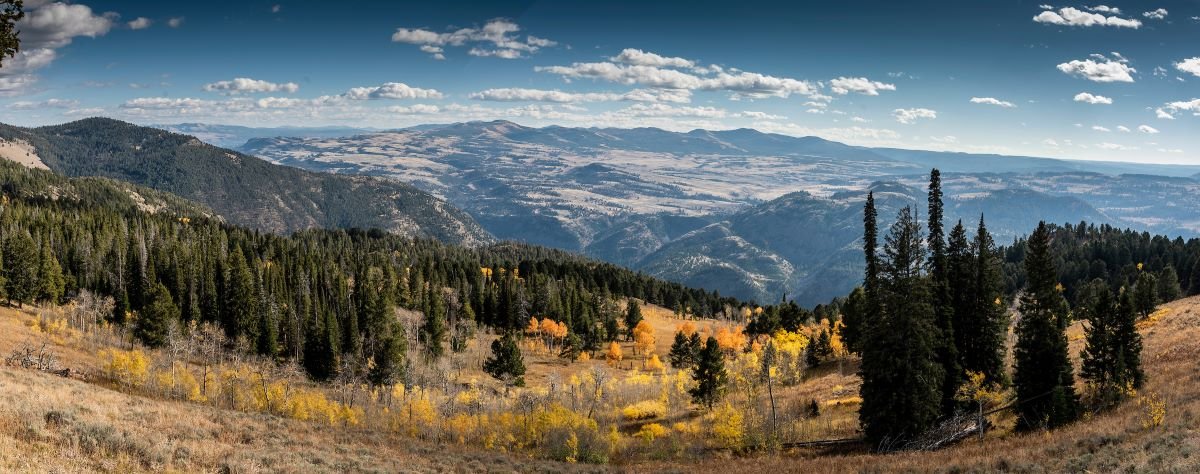
The view of Yellowstone National Park from Crevice Mountain in Montana. In 2023, GYC stopped a gold mine from being developed on this remarkable piece of land. (Photo © William Campbell)
Conservation rarely ends with a single transaction. The remaining privately owned inholdings and mineral rights still posed a risk of future development. To address those threats head-on, GYC reached out to The Conservation Fund — a national land conservation nonprofit — and the U.S. Forest Service, with the goal of working together to secure these lands.
By purchasing private in-holdings and transferring them into public ownership, the partners have permanently protected these vital lands from mining and development under the mining ban established by the Yellowstone Gateway Protection Act.
Over the last three years, GYC worked closely with our partners and private landowners on Crevice Mountain to ensure the successful transition of land and mineral rights from private ownership to public stewardship. Now we are celebrating 161 acres of new public land in Montana through two transfers: a 148-acre Crevice Mountain Mining Company parcel and the 13-acre Emma parcel.
Using money from the federal Land and Water Conservation Fund, which supports everything from local parks to trails and habitat conservation, the USFS purchased the two parcels, turning them into public land and forever protecting them from development.
These transfers required significant coordination and partnership. TCF played a critical role by securing the CMMC property until the Forest Service could complete the purchase, making the complex transaction possible.
The conservation impact extends beyond the surface of the land itself. In addition to protecting the minerals beneath the CMMC parcels and a portion of the Emma parcel from future development, GYC also donated 194 acres of below-ground mineral rights under adjacent Forest Service lands on Palmer Mountain. These mineral rights were part of GYC’s acquisition of the mining company and are now permanently protected from development.
Camera traps at the proposed mine site captured images of grizzly bears, elk, mountain lions, foxes, and more. Now this landscape is forever protected from the threat of mining. (Photos/Videos © GYC)
Together, these efforts demonstrate what’s possible when conservation organizations, public agencies, and private partners unite around a shared vision for the future of the Greater Yellowstone Ecosystem. By bringing these lands and mineral rights into public ownership, we ensure that Crevice and Palmer mountains remain wildlife habitat, migration corridors, and a landscape people can experience and enjoy for generations to come. Protecting these lands safeguards Yellowstone’s remarkable natural heritage while strengthening the broader ecosystem and communities connected to it.
The next time you stand beneath the Roosevelt Arch on the border of Yellowstone National Park and look east toward the forested mountains along the Park’s northern boundary, you will see Crevice Mountain rising 3,000 feet above the Yellowstone River. Consider what could have been – and what was protected through collaboration, persistence, and a shared commitment to conservation.

—Sally Schrank, Montana Conservation Manager (Bozeman, MT)