New Wildlife Crossing Nears Completion in Southeast Idaho, Keeping People and Wildlife Safe
On a crisp August morning south of Montpelier, Idaho, traffic moves in a single lane through a construction zone. A reported 100 mule deer are killed in collisions on this 20-mile stretch of U.S. Highway 30 each year, most within the 5-mile Rocky Point area.
The construction underway is the installation of three wildlife underpasses across this critical 5-mile stretch—the culmination of decades of collaboration among state agencies, conservation and sporting groups, and local communities. Construction is slated to be completed this fall, improving safety for people while protecting migrating deer and other wildlife.
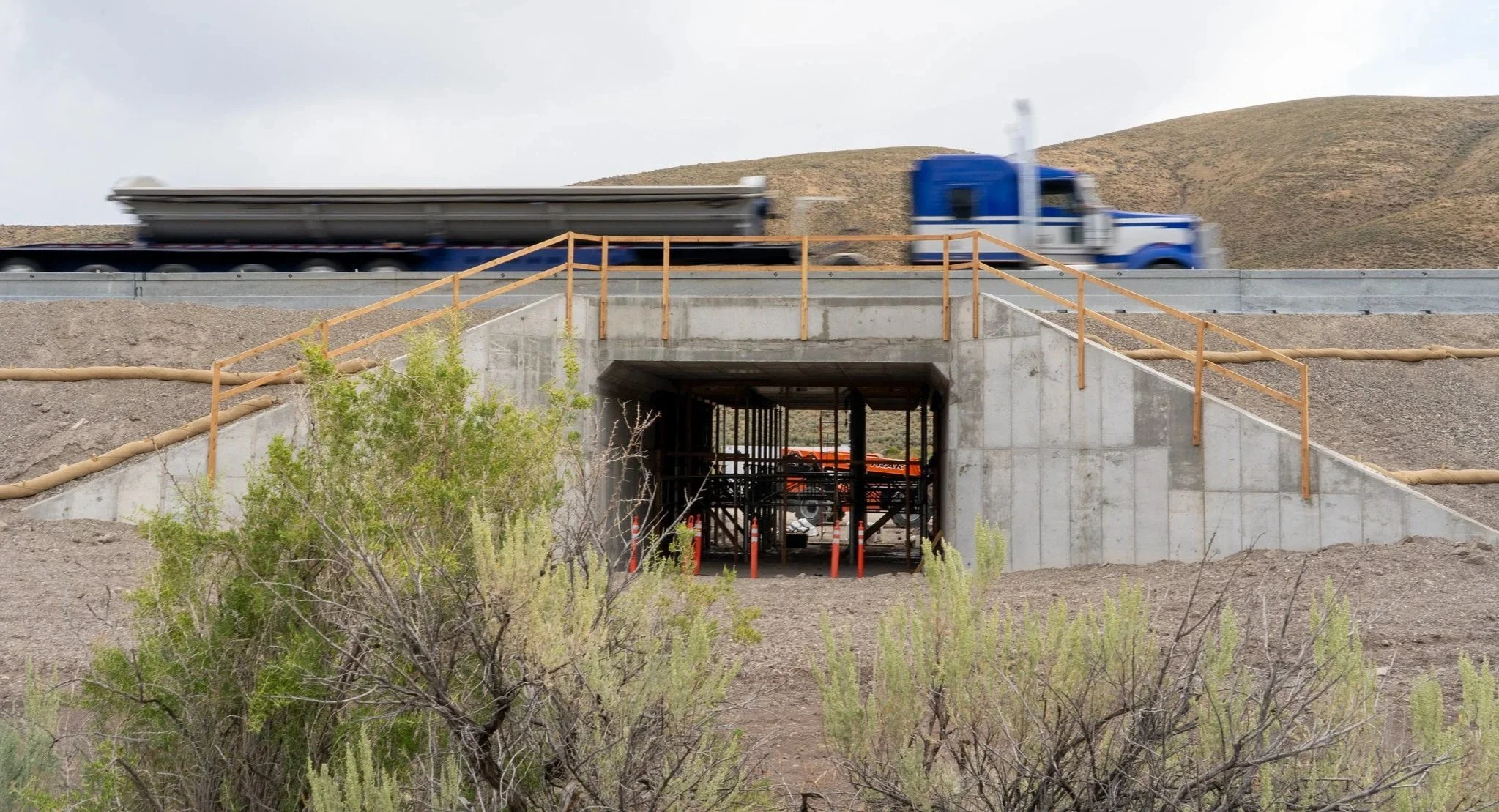
A truck zooms over one of three wildlife underpasses being constructed near Rocky Point. Photo GYC/Julia Barton
Just off the highway, Greater Yellowstone Coalition staff join Bear Lake County Commissioner Wynn Olsen, the Idaho Conservation League, the Theodore Roosevelt Conservation Partnership, the Idaho Department of Fish and Game, and the Idaho Transportation Department to host a project tour with staff from the offices of Sen. Mike Crapo, Sen. Jim Risch, and Rep. Mike Simpson to demonstrate the importance of wildlife crossings to public safety and wildlife migrations in the Greater Yellowstone Ecosystem.
Rocky Point shows what's possible when agencies, conservation and sporting groups, and local communities work toward the same goal. GYC has been part of this project for years—contributing time, energy, and funds toward the effort.
Wildlife-vehicle collisions are expensive, costing Idaho an average of nearly $145 million per year. Wildlife under- and overpasses paired with fencing are the most effective safety tool available, reducing collisions with large animals by up to 97 percent while keeping migration corridors intact.

Thousands of mule deer cross this stretch of highway during annual migrations between summer range in Idaho’s Caribou Mountains and Wyoming’s Star Valley, to winter range northeast of Bear Lake. Photo GYC/Tom Hallberg
Idaho is home to great herds of migratory wildlife—as they move across the landscape; they are a symbol of the wide-open space that makes this region so remarkable. The integrity of migratory corridors is critical to support the health of these big game herds, local economies, and future generations that will benefit from abundant native wildlife resources.
The reported annual collisions in this area are likely an underrepresentation as unreported collisions and wildlife that succumb to their injuries away from the road are difficult to quantify. The new underpasses will allow wildlife to move across the land without crossing the highway, keeping drivers safe and migratory habitat connected.
Idahoans overwhelmingly support the building of crossings in the right places and continuing federal funding for them. Earlier this year, the Idaho Legislature passed Senate Concurrent Resolution 124, affirming its strong support for the public safety and conservation benefits of wildlife crossings.
Idaho already has proof this works. The state's first major wildlife overpass, completed near Cervidae Peak on Idaho State Highway 21 near Boise in fall 2023, saw zero reported wildlife-vehicle collisions in the project area in its first year.
Various conservation organizations, sportsmen's groups, private entities, and agencies have donated to the Rocky Point project over the years. In 2019, GYC donated $150,000 to help purchase critical conservation easements at Rocky Point from Bear Lake County landowners that will provide open space for mule deer to migrate through this corridor in perpetuity.
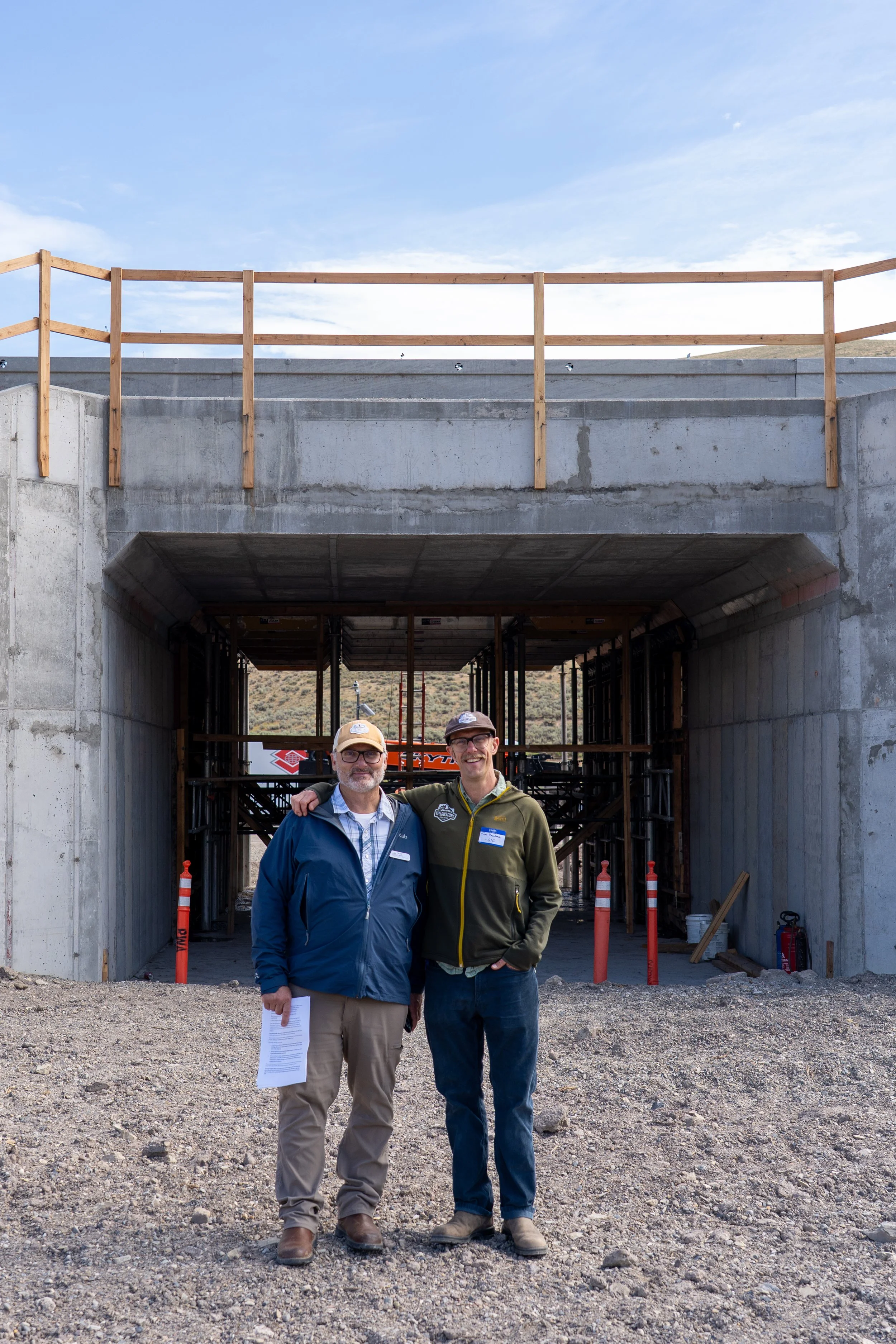
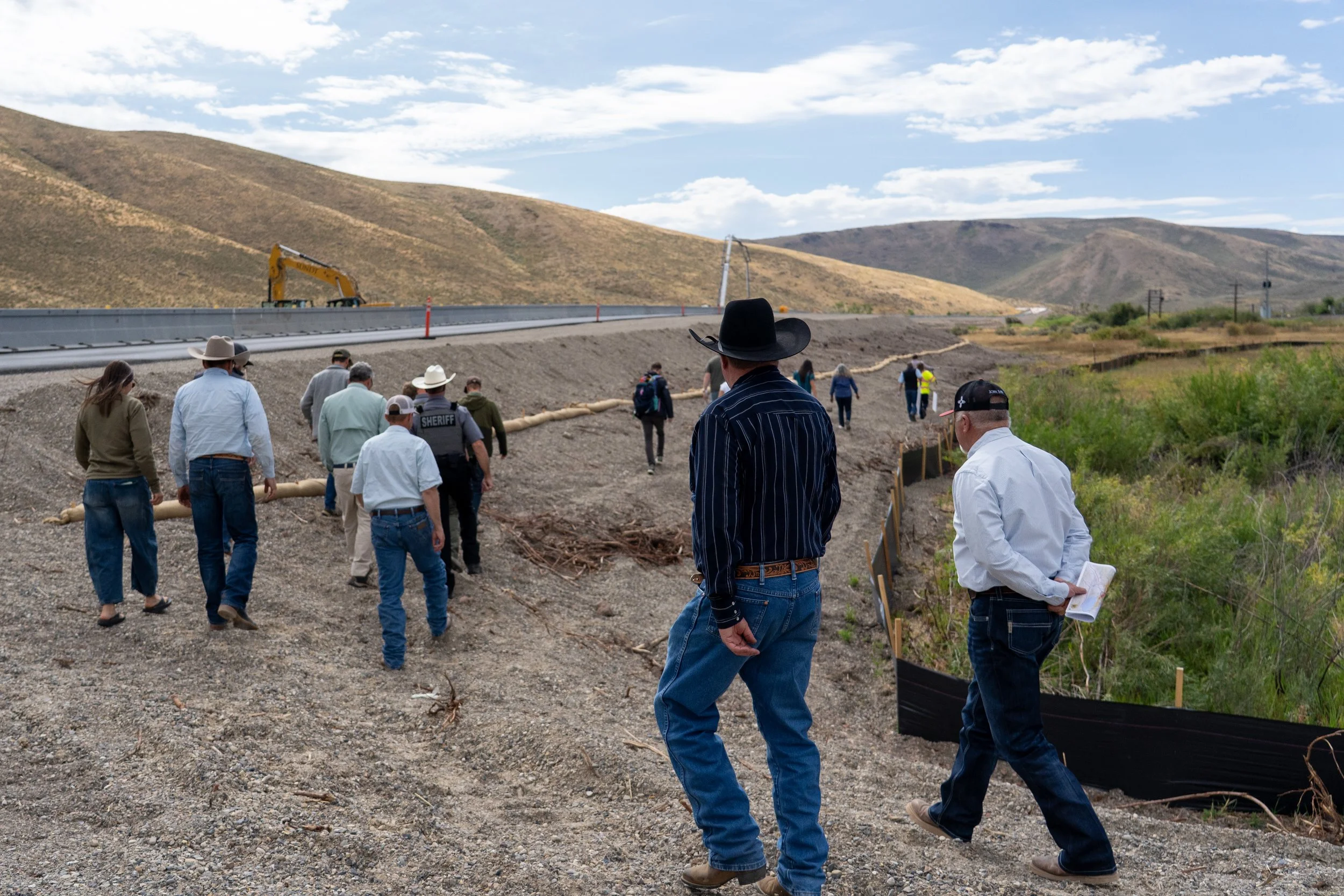


The tour brought together conservation partners, state agencies, federal delegation staff, community members, and local landowners for a close up look at one of the crossing underpasses. Photos GYC/Julia Barton
ITD secured a $20.8 million grant for the Rocky Point crossing from the Federal Highway Administration's Wildlife Crossing Pilot Program, which authorized $350 million for wildlife crossings nationwide as part of the Infrastructure Investment and Jobs Act of 2021.
That federal funding is what makes projects like this possible—but it’s not yet guaranteed to be available long-term. Tour attendees were asked to support federal legislation that would continue funding wildlife crossings in Idaho and across the country, including the Wildlife Road Crossings Program Reauthorization Act and the BUILD America 250 Act.
If you’d like to help support GYC’s work protecting people and wildlife on roads across Greater Yellowstone, please consider subscribing to our emails or making a charitable gift.

– Matt Lucia, Idaho Conservation Manager [Driggs, ID]