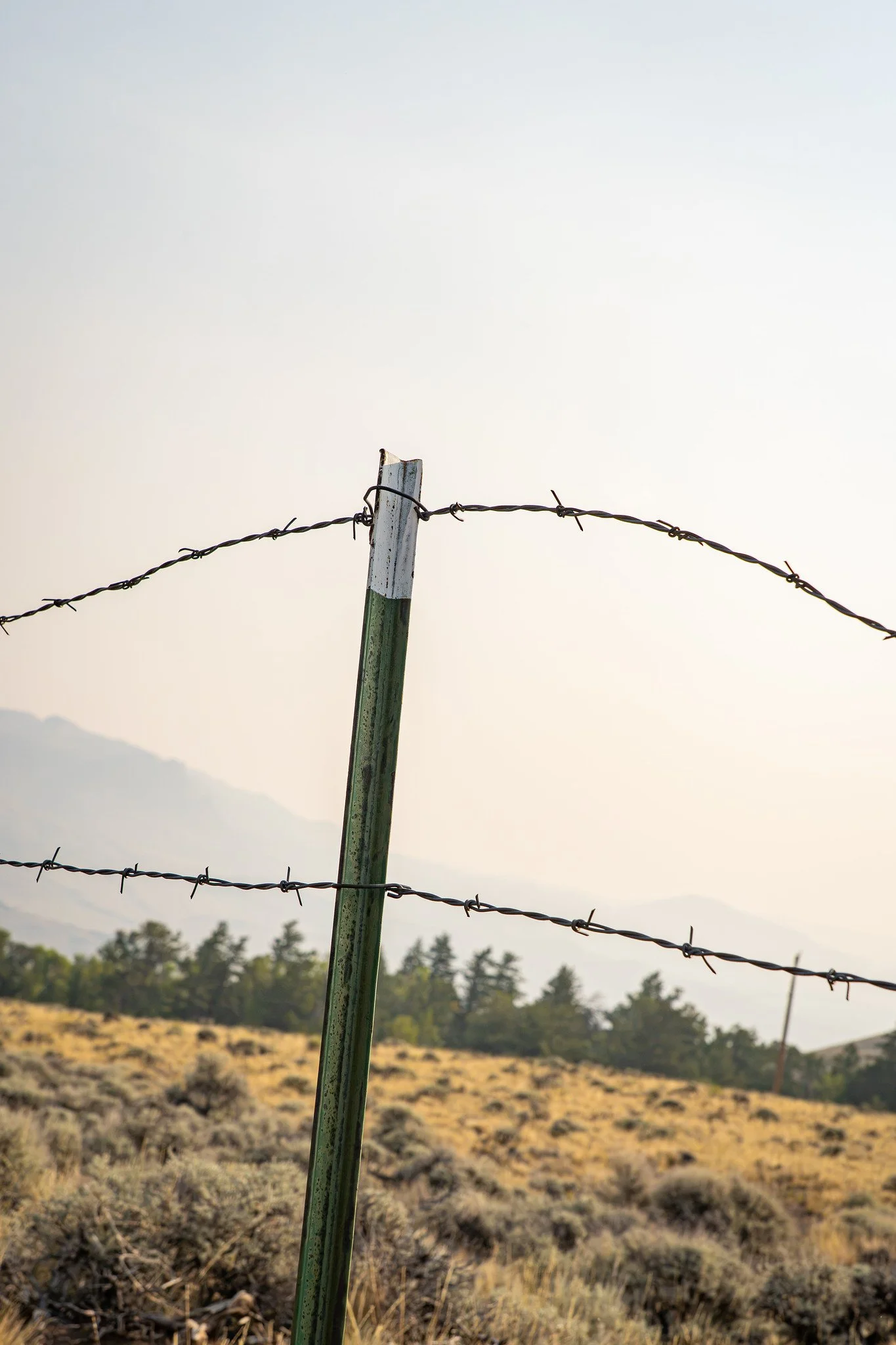
Barbed wire fences are found everywhere in the ecosystem, making it difficult for wildlife to move and migrate.
The Greater Yellowstone Coalition is enhancing habitat connectivity, preserving ancient migration routes, and preventing unnecessary wildlife deaths from getting caught on barbed wire fences by making fences in the Greater Yellowstone Ecosystem friendlier to wildlife—or just removing them outright.
On one of the smokiest days in recent memory, my colleague Julia and I made the trek down from Bozeman, Montana to Cody, Wyoming. It’s one of my favorite drives in the Greater Yellowstone Ecosystem with the Beartooth Mountains looming high over the highway and an infinite stretch of sagebrush sea ahead. However, the smoke was completely socked in and it felt more like we were driving into an orange hazy void.
What lay ahead for us on this smoky landscape? We were joining a volunteer fence-removal day outside of Cody that GYC and partners were hosting. Both Julia and I tend to spend most of our time in front of computer screens with our communications and marketing work, so we jumped at the chance to spend some time out in the field.
As we rolled up to the site, we were greeted by the intrepid members of the Absaroka Fence Initiative. AFI is a group of landowners, agricultural producers, government agencies, nonprofits, and community members exploring innovative ways to address the challenges fences pose for wildlife near Cody. GYC is one of AFI’s founding organizations, and our Senior Wyoming Conservation Associate Erin Welty is currently one of the co-chairs.
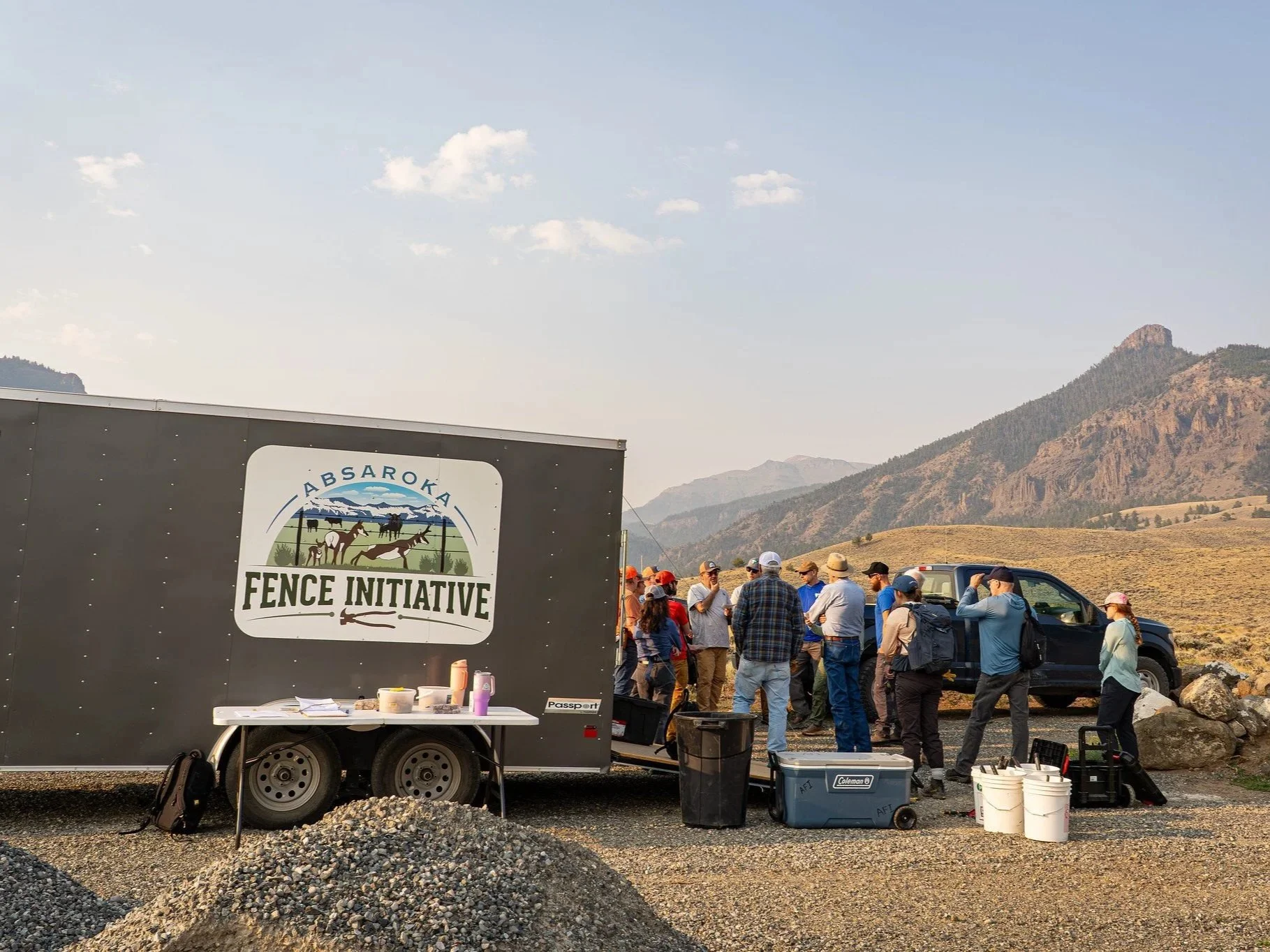
The AFI crew shares the fence-removal plan with the group of volunteers. GYC and AFI are enhancing habitat connectivity, preserving ancient migration routes, and preventing unnecessary wildlife deaths from getting caught on barbed wire fences by making fences in the Cody, Wyoming area friendlier to wildlife—or just removing them outright.
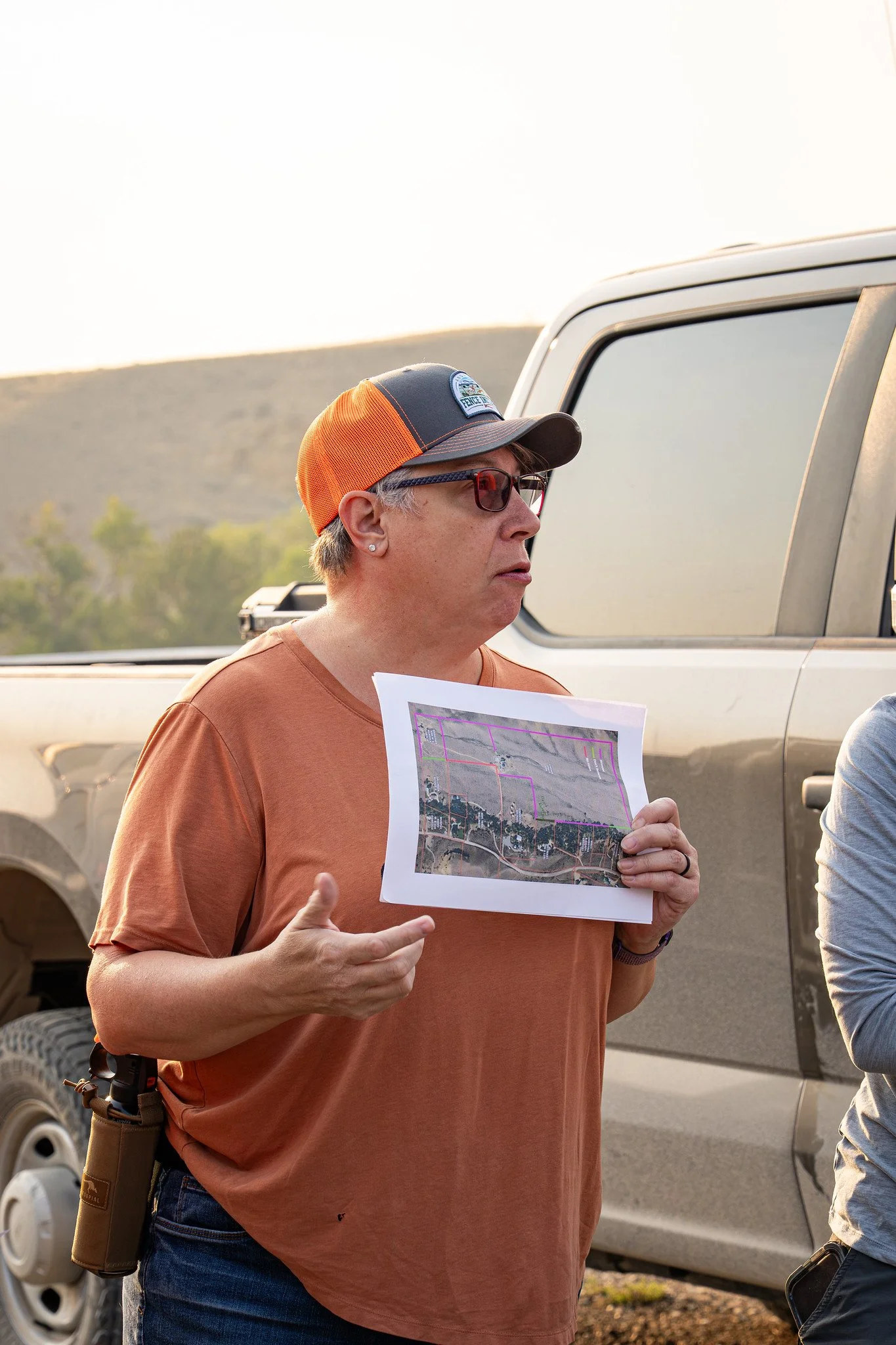
GYC’s Senior Wyoming Conservation Associate Erin Welty shares a map of the property showing which fence lines to remove and which to leave alone.
Over the next 30 minutes, more than 20 volunteers showed up to make a difference for wildlife. Erin and AFI co-chair Kimi Zamuda of The Nature Conservancy briefed the group and split up the volunteers into three parties. Tools were distributed and carrying water was encouraged. Starting in opposite corners of the property, each party was to remove their barbed wire until the majority of the fence was gone.
The volunteers got to work. Some were longtime AFI volunteers and moved as though they had removed 100 fences in their lifetime. Some were newer and took a while to get accustomed to the wire-cutting tools. Soon, the groups were lean, mean, barbed-wire-removing machines.
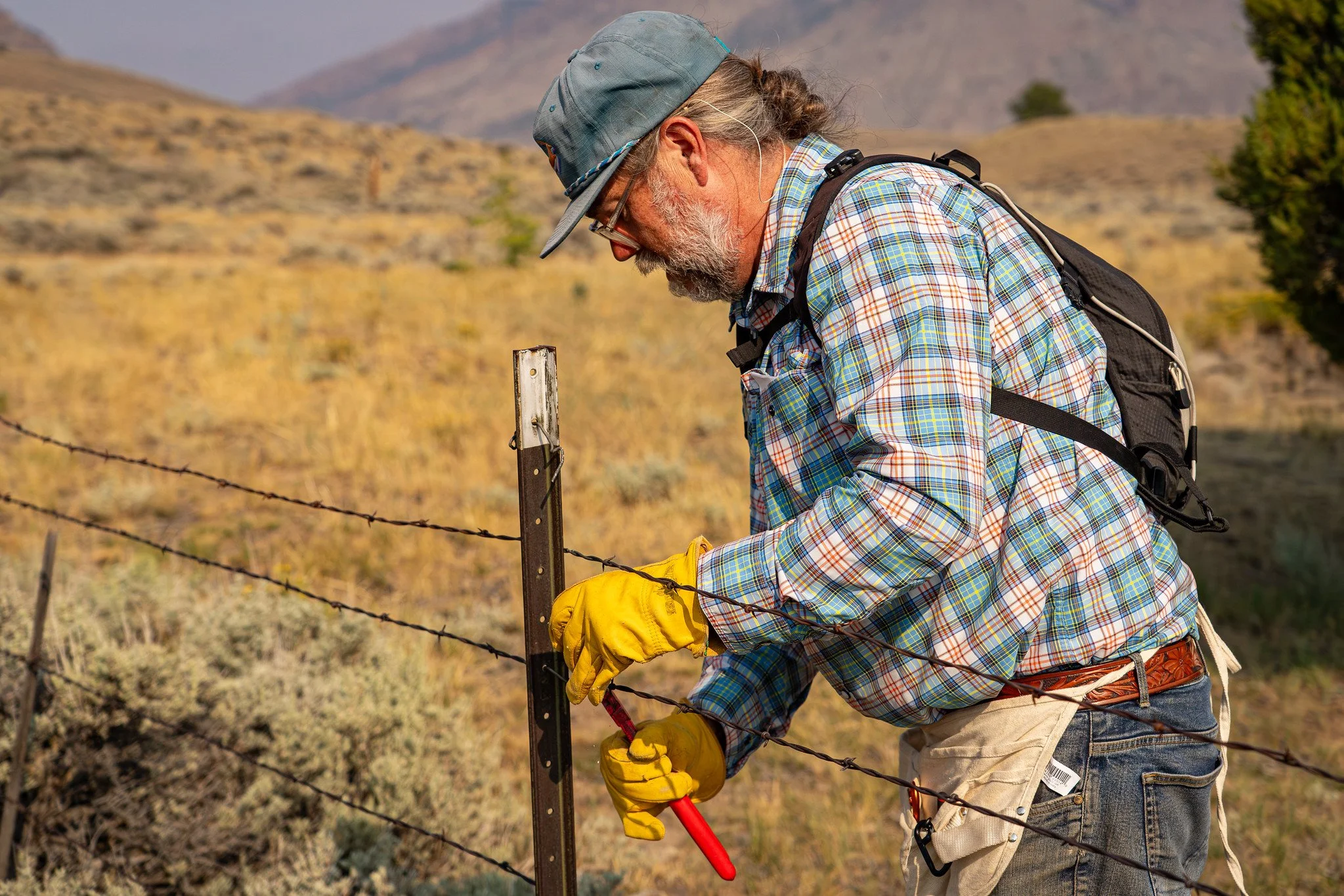
GYC’s Wyoming Conservation Manager Jared Baecker swiftly detaches the barbed wire from the fence posts.
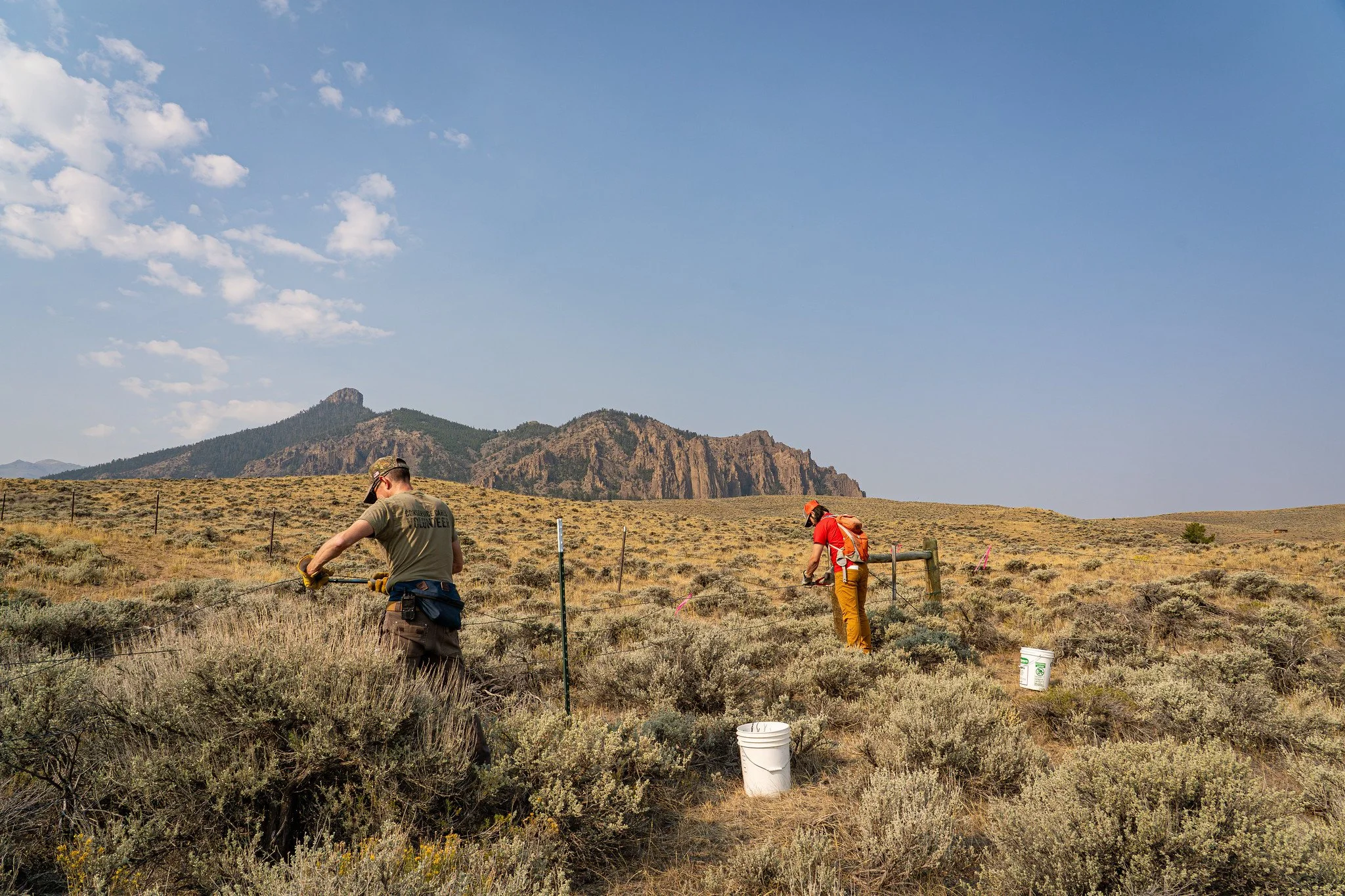
Two crew members make quick work of a fence near a picturesque corner of the property.
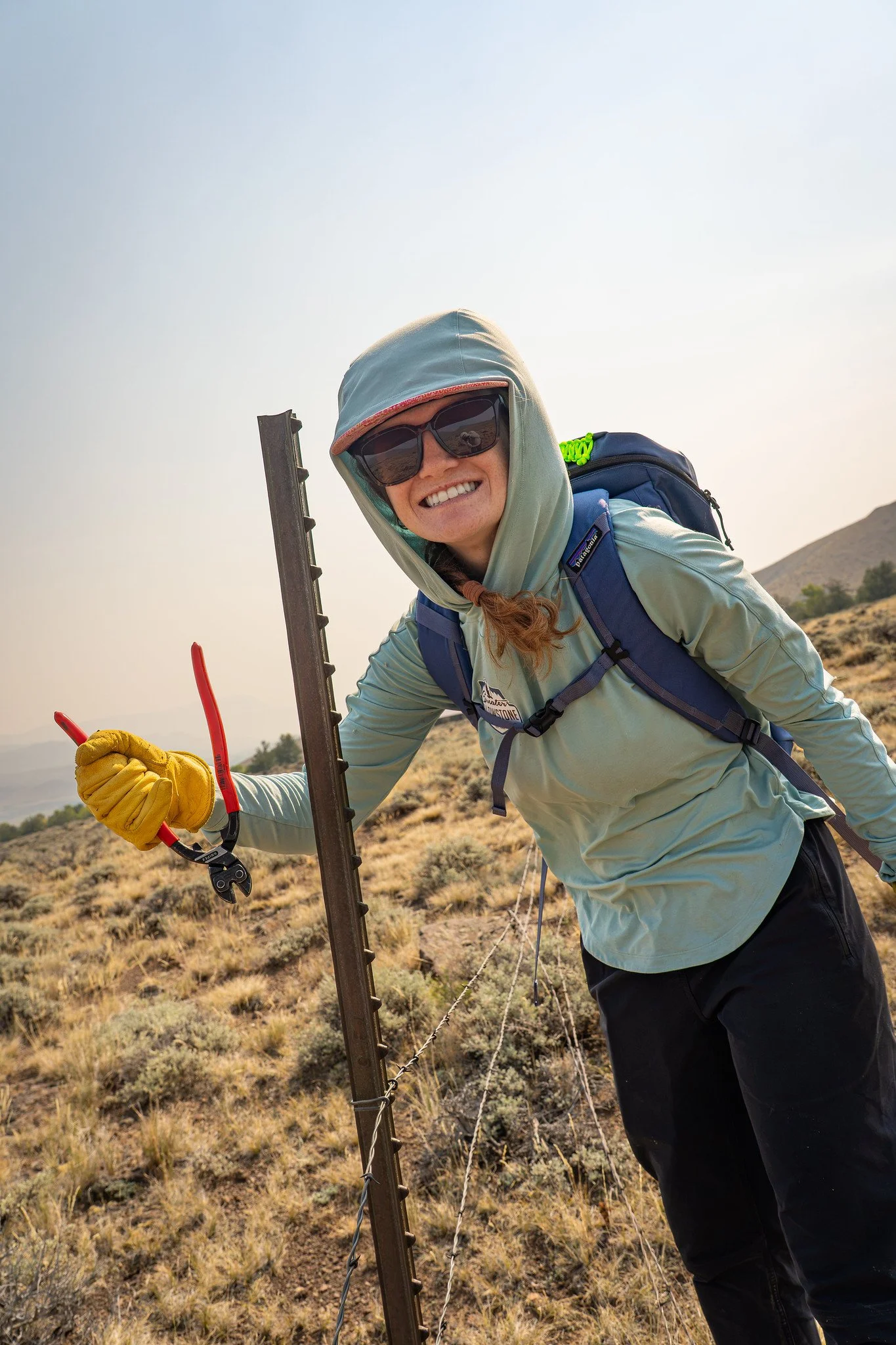
GYC’s Communications Associate Julia Barton masters her fence removal technique.
The landscape around Cody provides critical habitat for numerous species and is part of an important migratory pathway for mule deer, pronghorn, and elk. Whether animals are migratory or simply need to move unencumbered throughout their range to meet their daily needs, connected landscapes are what keep Yellowstone’s wild inhabitants healthy and thriving. Without connectivity, wildlife are in peril.
The genius behind this work is its simplicity. It’s a practical, low-cost, and high-impact solution. GYC’s work is broad and varied, and sometimes campaigns can take years to get across the finish line. But in one morning, our crew was making a huge difference for Greater Yellowstone’s iconic wildlife.
Even if removing the fence is not an option, especially if livestock needs to be contained, there are a few simple changes that make a world of difference for several species of wildlife. Elk and deer prefer to jump over fences so by bringing down the top wire just a couple of inches, to 38 inches, we can reduce the chances of these ungulates getting stuck with a foot caught on the wire.
Pronghorn, coyotes, and other smaller species prefer to crawl under the fence rather than hopping over it. By removing the bottom barbed wire and replacing it with a smooth wire at 18 inches, wildlife can squeeze underneath without getting trapped or cut up on the barbed wire.
It’s not often that you can see a tangible difference for the Greater Yellowstone Ecosystem in just a couple of hours. Soon, the groups connected and 1.82 miles of fence was gone. A few volunteers rolled up the last of the barbed wire to haul out and dispose of. And just like that, the 45-acre piece of land was opened to enhance habitat connectivity and wildlife migration and movement.
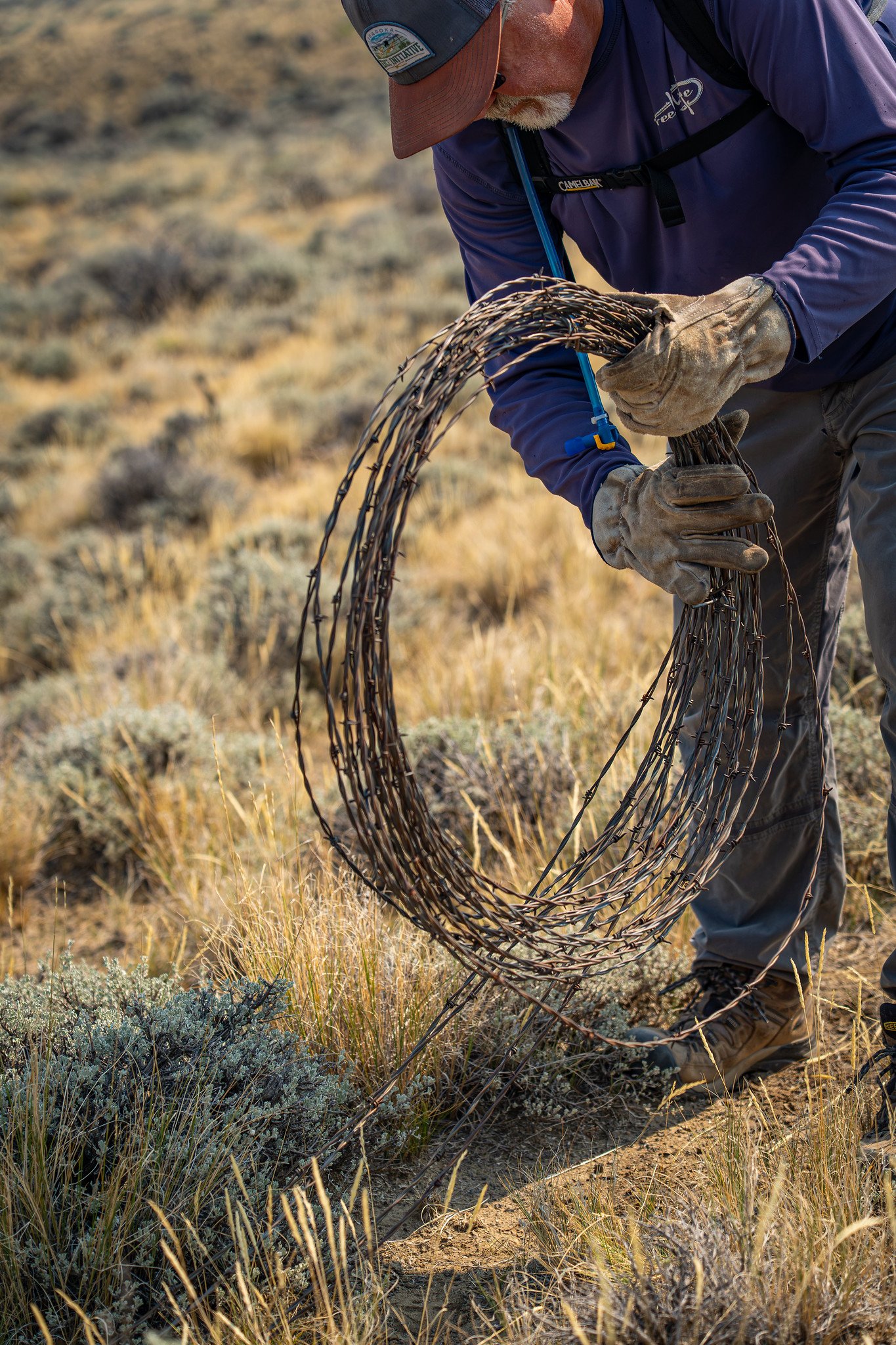
Tough work gloves are required for rolling up yards of barbed wire.
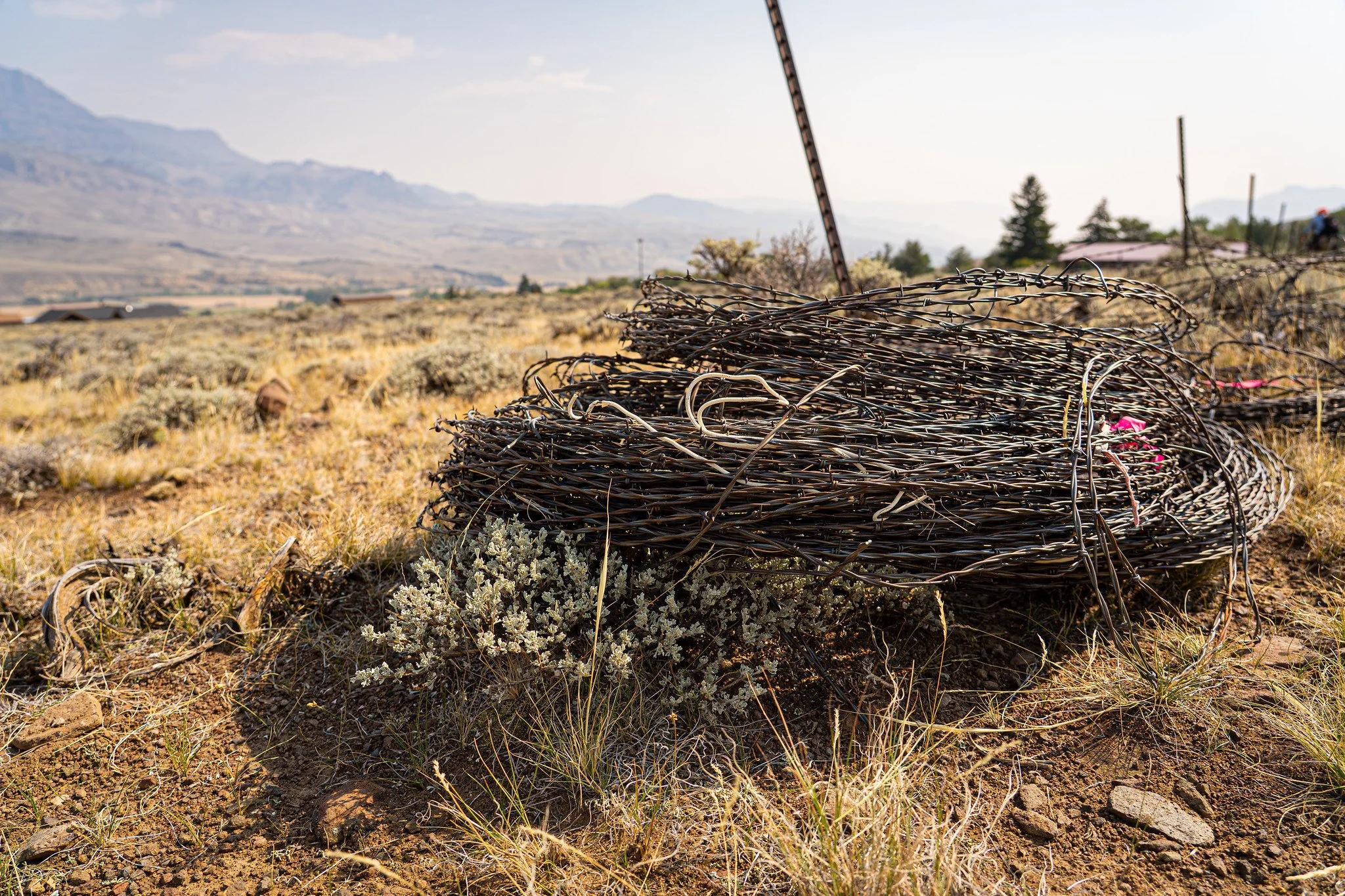
With three lines of barbed wire creating the fence, the crew removed and rolled up over 5.50 miles and 1,520 pounds of wire in a morning!
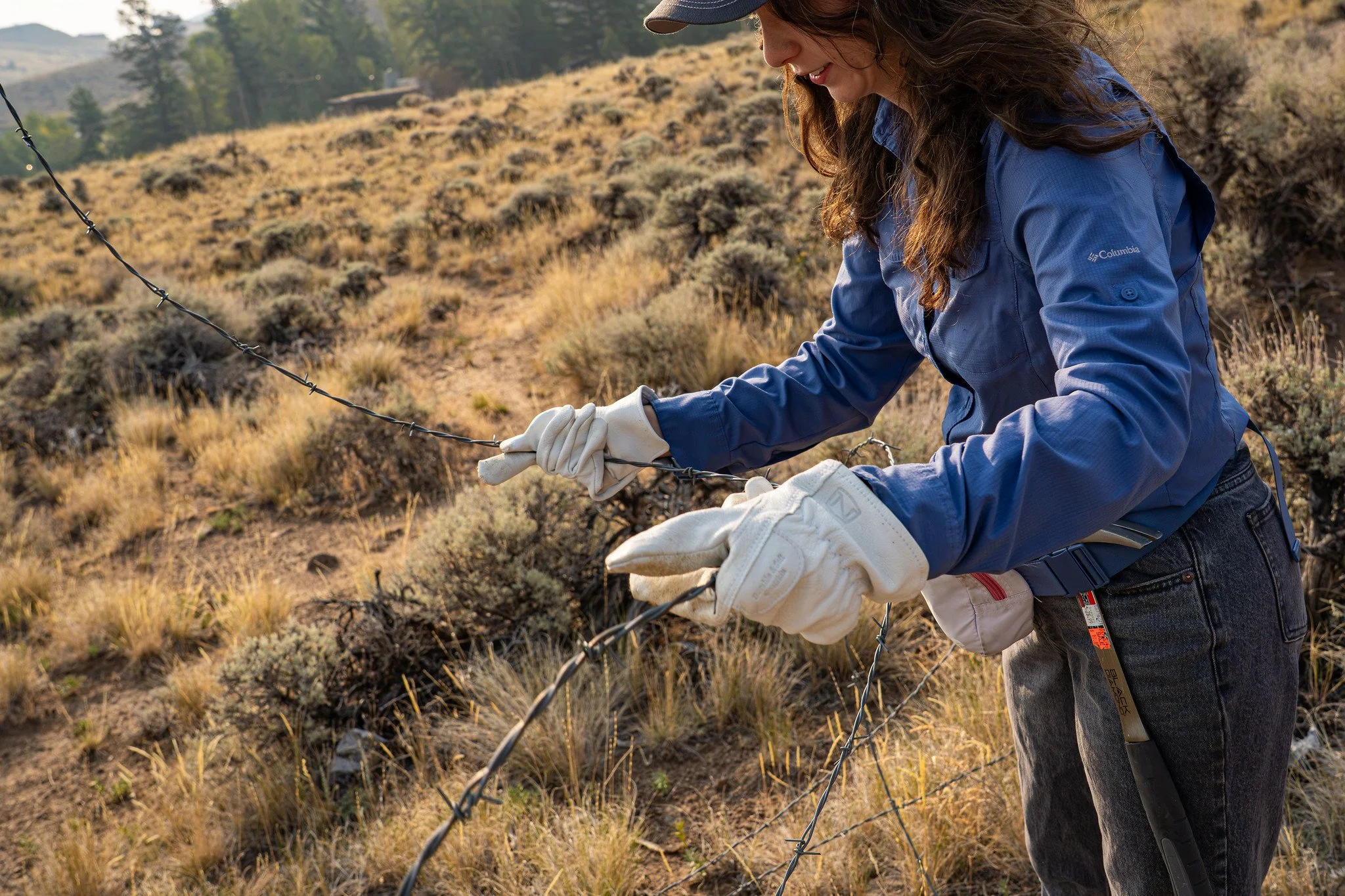
Getting the roll of barbed wire started is always the hardest part.
If you’d like to support this work, please consider a gift to the Greater Yellowstone Coalition so that we can continue to offer these fence removals or modifications free of charge to local landowners.
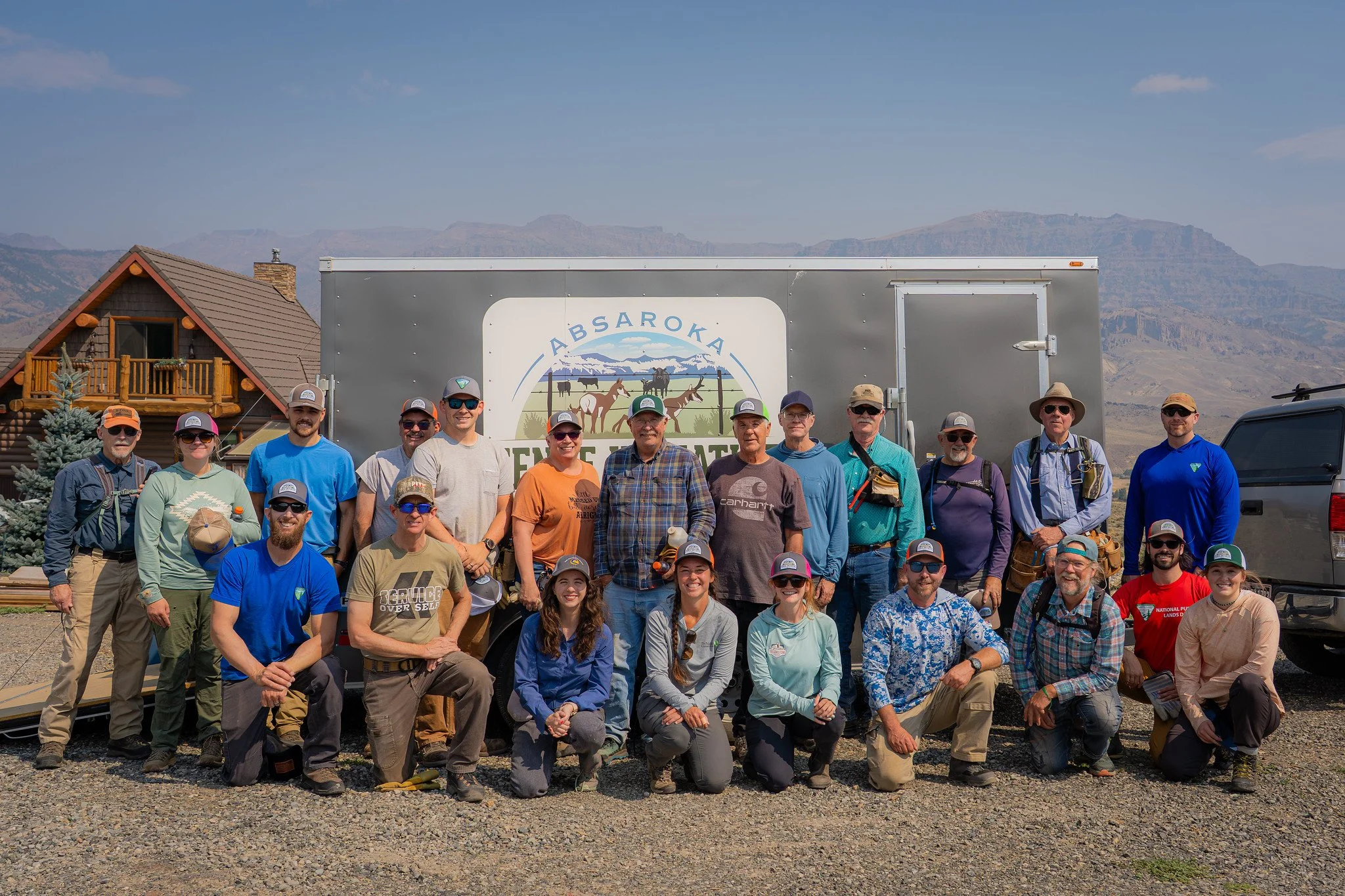
The amazing AFI and volunteer crew! In one morning, they removed 1.82 miles of barbed wire fencing to make it easier for wildlife to migrate and move across the Cody landscape.
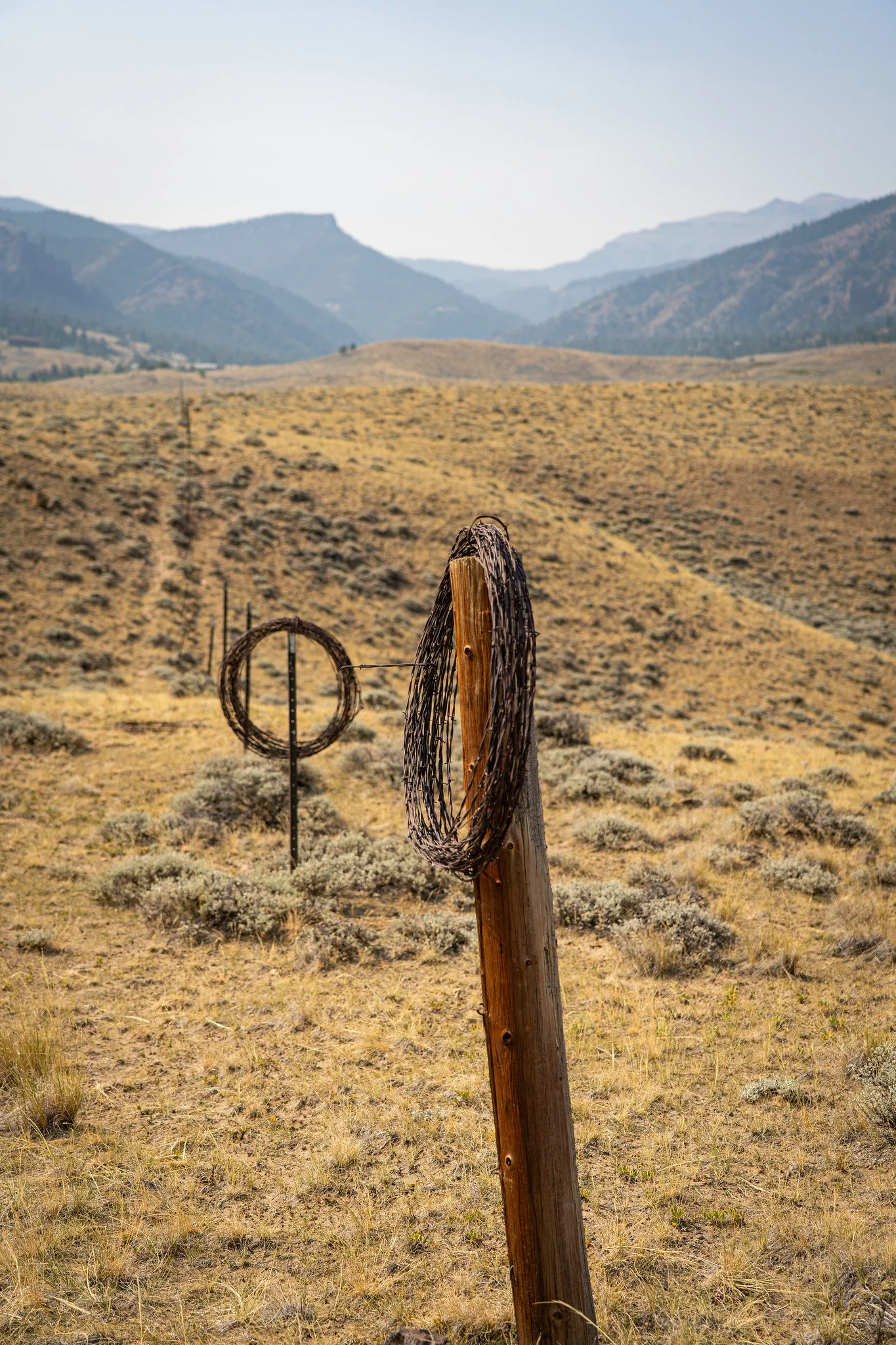
Rolls of wire waiting to get picked up and disposed of.
A huge thank you to our volunteers who showed up and made a difference for Greater Yellowstone’s wildlife! We couldn’t do this important work without you. If you’re in the Cody area and would like to stay informed with volunteer opportunities, you can sign up here.

—Emmy Reed, Senior Digital Communications Associate (Bozeman, Montana)
Photos Greater Yellowstone Coalition/Emmy Reed