The Roadless Rule Protects More Than Wild Places
It’s the time of year when friends and family start disappearing into the woods for days at a time. Meetings are canceled. School absences spike. Camo and hunter orange dominate local fashion. In extreme cases, anniversaries are missed. The sacred autumn ritual of heading for the high country, whether it’s for big game, wild trout, or a mosquito-free backpacking adventure, is something many of us live for. Something you just don’t mess with.
Unfortunately, the U.S. Department of Agriculture wants to mess with your favorite backcountry destinations, and worse.
For 25 years, the Roadless Area Conservation Rule has quietly protected some of the most important public lands in the country—45 million acres across the West—from new road construction and development.
Now the federal government wants to eliminate the rule entirely. Even though Idaho has its own rule, Idahoans still have reasons to oppose the proposed elimination since you’re crossing state lines regularly to enjoy other Western public lands.
Scrapping the Roadless Rule could have real consequences for our fall outdoor adventures, but also for our drinking water, the wildlife that defines the West, and our efforts to prevent wildfires caused by people.
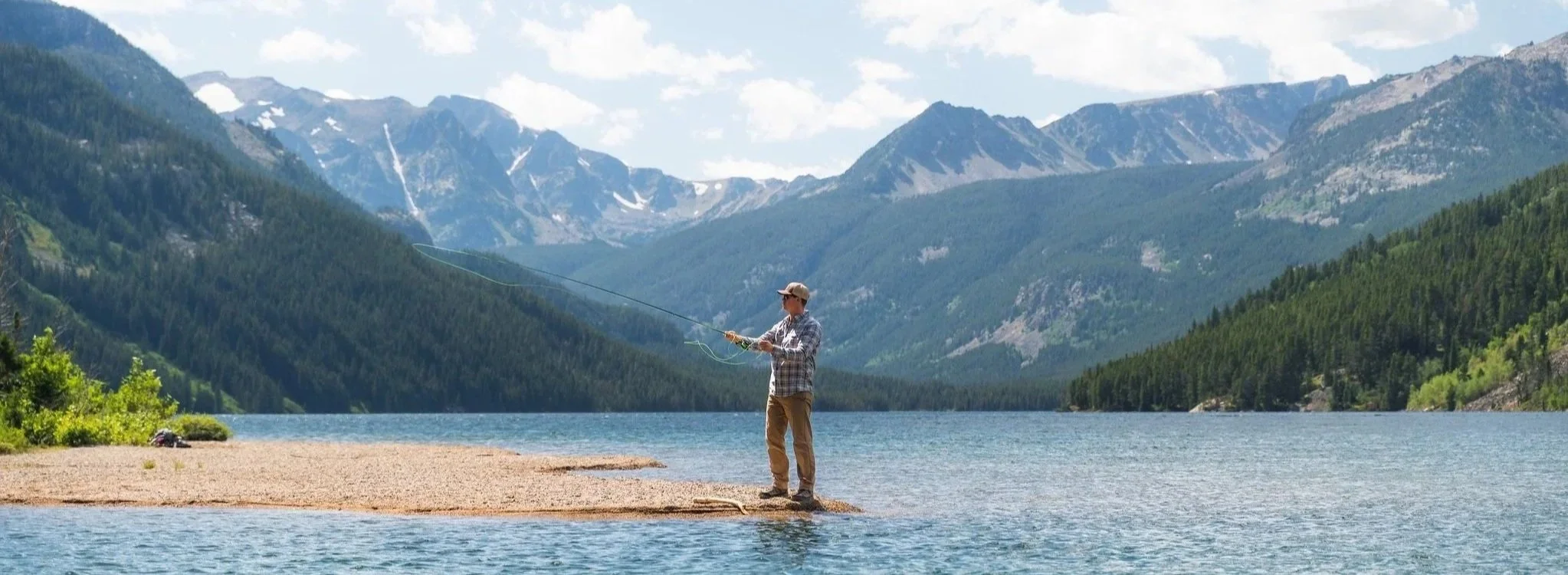
For a generation, the Roadless Rule has helped protect clean water, wildlife habitat, and backcountry experiences, while avoiding increasing the taxpayer burden of maintaining expensive forest roads. (Photo Jordan Lefler)
Start with water.
National forests are the largest source of drinking water in the United States, supplying more than 60 million Americans across 33 states. Snow and rain falling high in our mountains flow downstream to our communities.
Roadless forests help keep those waters clean. Building roads into remote forests clears vegetation and disturbs soil, creating opportunities for sediment and pollutants to enter streams. Protecting intact watersheds is far easier—and cheaper—than repairing them after damage.
The same is true for wildlife habitat.
Roadless areas provide some of the largest remaining blocks of secure habitat for elk, mule deer, cutthroat trout, birds, bears, and countless other species.
These places also give wildlife room for seasonal movements. As development fragments habitat elsewhere, connected public lands become increasingly important for migration, reproduction, and survival. Protecting roadless areas helps ensure the West remains a place where healthy wildlife populations—and the hunting, fishing and wildlife-watching traditions and livelihoods they support—can thrive.
Then there is wildfire.
At a time when Western communities are understandably concerned about fire, building more backcountry roads is the wrong solution. More than 90 percent of U.S. wildfires start within half a mile of a road. Roads bring vehicles, campfires, and people-powered wildfire ignition into places that currently see less traffic. The Forest Service itself agrees that more roads in the backcountry will lead to more wildfires.
Meanwhile, the Forest Service already manages 380,000 miles of roads — twice the length of America's highway system, and it comes with a $10.8 billion road maintenance backlog. Adding more roads when we cannot maintain the ones we already have doesn't make sense.
Importantly, the Roadless Rule does not lock people out of public lands. These areas are open for hunting, fishing, hiking, camping, and more. The rule has local flexibility through built-in exceptions for wildfire management, forest health improvement, and dealing with floods.
Simply put, it protects our last intact national forest lands from new roads and industrial-scale development.
Americans understand the value of that approach. A recent Pew survey found that 76 percent of voters support the Roadless Rule.
For a generation, the rule has helped protect clean water, wildlife habitat, and the backcountry experiences we cherish, while avoiding increasing the taxpayer burden of maintaining expensive forest roads. Eliminating it now would trade those proven benefits for more development in remote places, the loss of prime wildlife habitat, and more wildfires.
So, before you disappear into the woods, take a moment to tell federal officials that protecting roadless public land is about more than preserving the wild places you visit each fall. It’s also about protecting the water, wildlife, and communities that depend on them.

—Scott Christensen, Executive Director [Bozeman, MT]