Laying the Groundwork for Wildlife Crossings in Eastern Idaho
Traffic zips in each direction, early-season visitors heading to dinner, locals driving back over Teton Pass from Jackson after a long day of work. Idaho’s Highway 33 is busy on this May 2025 afternoon, but it’s seemingly always busy these days, a gauntlet for cars and wildlife.
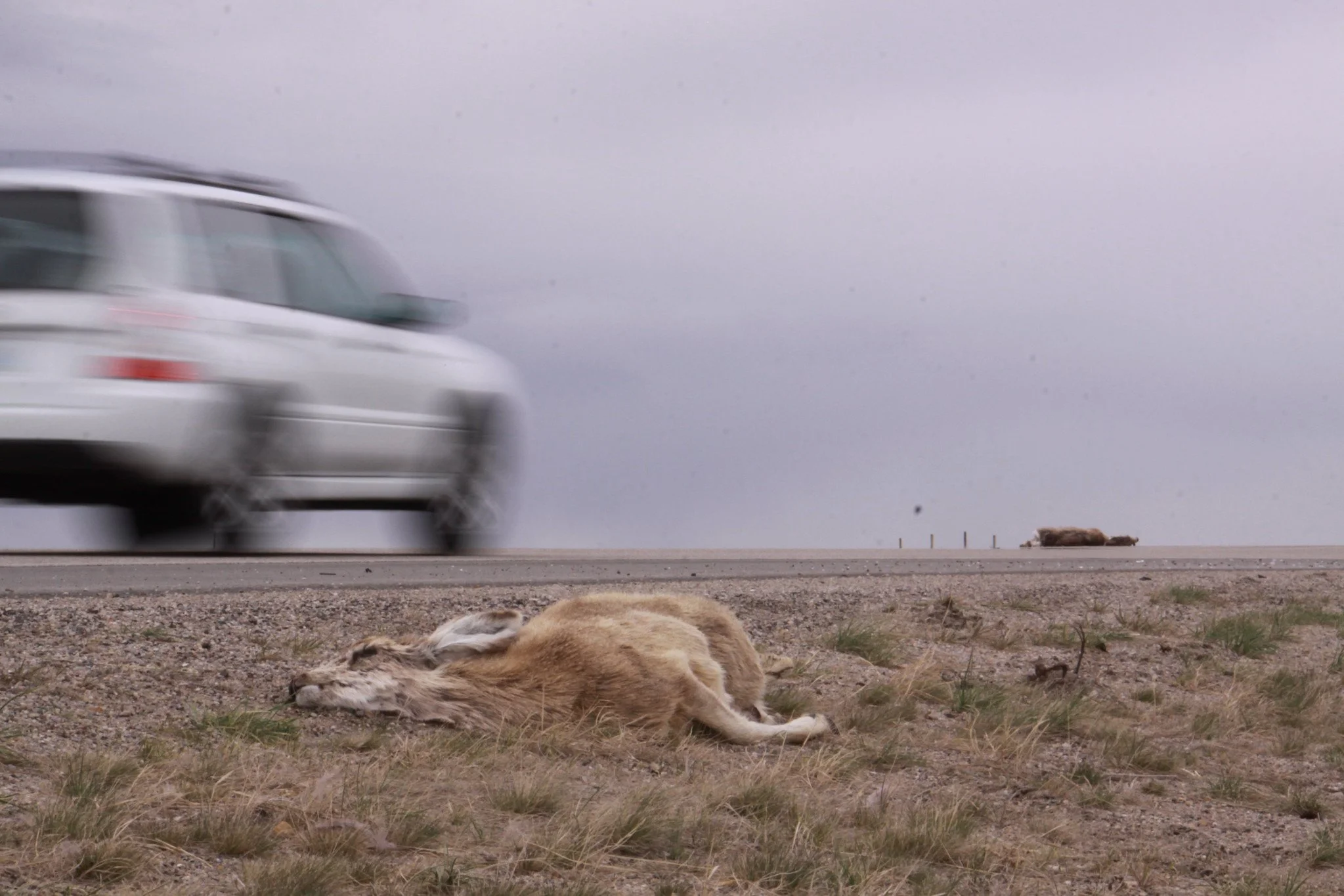
For years, GYC has advocated for infrastructure on US 20 to mitigate wildlife-vehicle collisions and connect fragmented habitat. Photo Mark Gocke
To the north, across the road, we spy a carcass behind the guardrail. Renee Seidler, executive director of the Jackson Hole Wildlife Foundation, leads our group of trainees across two lanes to the doe.
Armed with notebooks and medical gloves, we move the carcass away from the pavement and begin our examination. Species: Mule Deer. Sex: Female. Age: Juvenile.
Cause of death: Vehicle collision.
We’re training to be part of a roadkill survey on this stretch of Highway 33 between Victor and the Wyoming state line. Our group of volunteers hopes to provide valuable information that could someday help prove that a wildlife crossing should be built across this highway.
Well-designed, thoughtfully placed wildlife crossings paired with fencing can effectively reduce wildlife-vehicle collisions by up to 97 percent. So, they’re one of the best tools to protect people and preserve crucial landscape permeability.
Collisions between cars and wildlife threaten people's safety, have substantial economic impacts, contribute to wildlife deaths, and impede critical migrations. But wildlife crossings are expensive to build—naturally, agencies, funders, and communities want to ensure they are built in the most effective places.
Carcass data, like we’re collecting on Highway 33, is one measure that informs those decisions. Crash numbers and wildlife migration patterns are also crucial pieces of information, as is the existence of public or protected land on both sides of the road. Building momentum for a single project can be a decadeslong march of research, advocacy, and planning.
A new report that came out in fall 2025 incorporated all these kinds of data to prioritize where the Idaho Transportation Department should build crossings. Written by renowned road ecologist Patricia Cramer, the report found that most of the top 20 sites, based on ecological, transportation, and feasibility data, are in the Greater Yellowstone Ecosystem's sliver of eastern Idaho. In fact, number 20 on the list is the section of Highway 33 our team is surveying for roadkill.
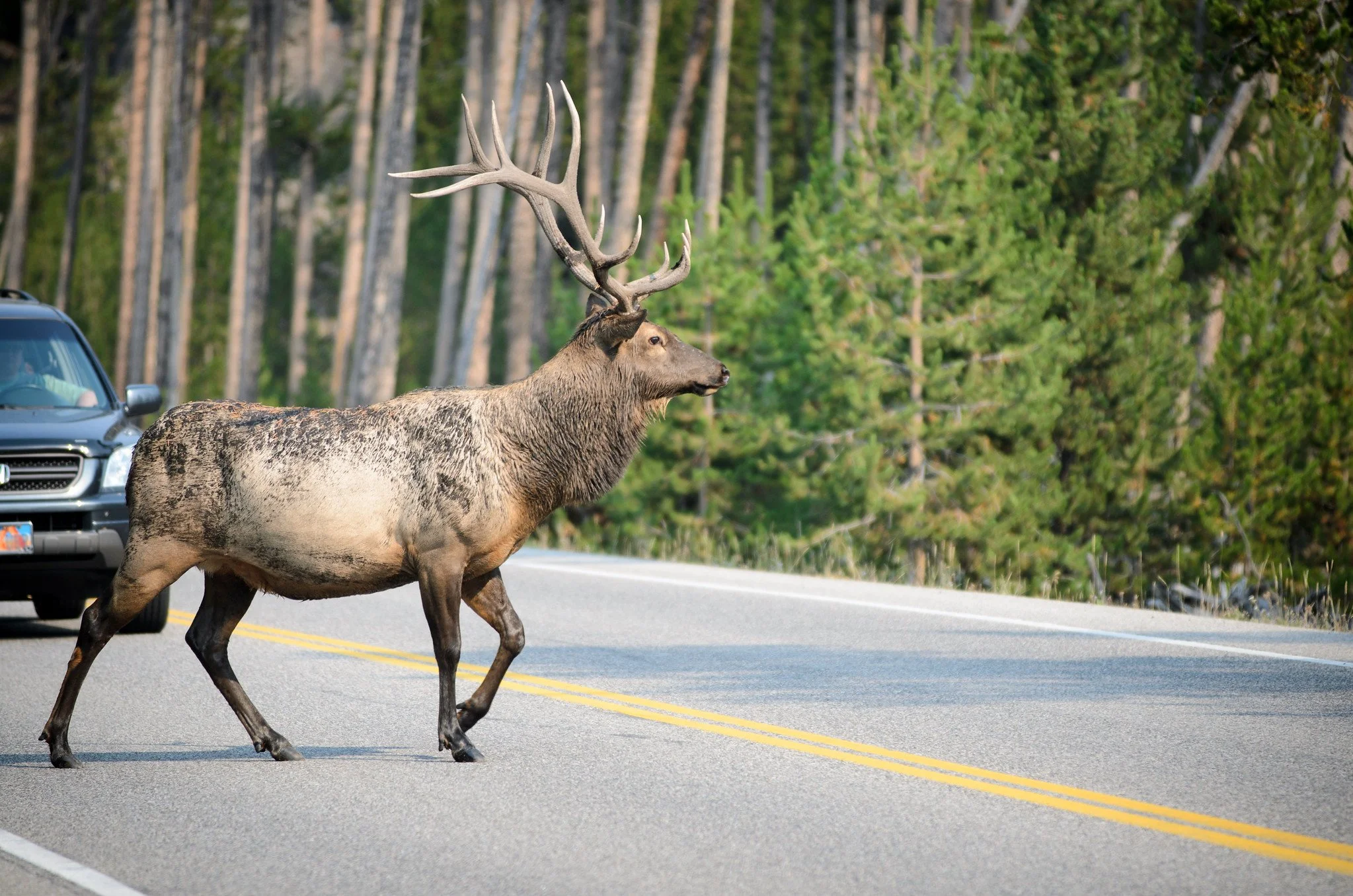
Collisions between cars and wildlife threaten people's safety, have substantial economic impacts, contribute to wildlife deaths, and impede critical migrations. Photo M_MUC1968/iStock
Implicitly, Dr. Cramer’s report showed that GYC has had its Idaho priorities in the right place for a long time. We’ve advocated for wildlife crossings on US 20 from Ashton, Idaho, to the Montana state line through Island Park for years. The highest-scoring segment in her report was Ashton to Harriman State Park, roughly 16 miles of highway that bisects thick, coniferous forests and open meadows. These crucial habitats support ungulate migrations from Island Park and the western edge of Yellowstone National Park to winter range in the Sand Creek Desert.
For years, GYC has advocated for infrastructure on US 20 to mitigate wildlife-vehicle collisions and connect fragmented habitat, and this report highlights the importance of continuing this work. Along the 45-mile stretch from Ashton to the state line, three other sections also landed among the priorities, demonstrating the need to protect this entire corridor.
This campaign may be reaching another inflection point, though the future is still murky. The Idaho Transportation Department has been conducting its Planning and Environmental Linkages (PEL) study for years, a process GYC has engaged in since the beginning. Now, the state has submitted the PEL to the federal government and hopes it will be approved by the end of 2026. That would start the environmental review and design processes, though it could be 10 to 15 years before the first shovel of dirt is moved.
Reports like Dr. Cramer’s are not the only resources GYC staff use when deciding where to advocate for crossings. We listen to community members, wildlife agencies, and local leaders to learn where they can have the most benefit for people and wildlife.
Listening to communities became even more important this spring, because the Idaho Legislature, with the encouragement and advocacy of Idaho’s sporting community, passed a first-of-its-kind resolution supporting the construction of wildlife crossings. Senate Concurrent Resolution 124 says, “the Legislature strongly supports the advancement of public safety and conservation of Idaho's big game migration corridors through the development and implementation of wildlife crossings where appropriate and supported by local communities.”
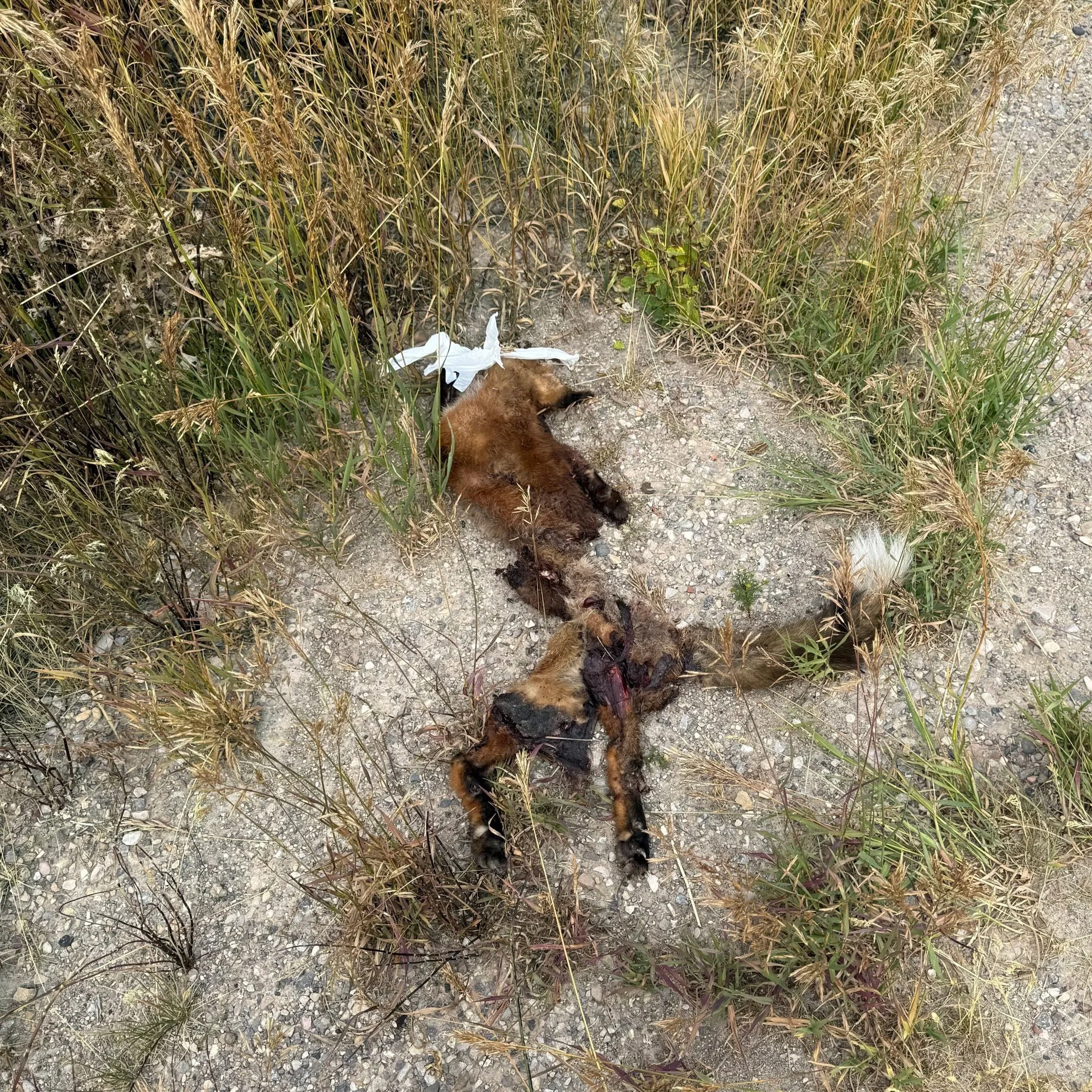
A fox killed by traffic on Highway 33 near Victor. Photo GYC/Tom Hallberg
That last clause carries a lot of weight. Community opposition sunk planned crossings on US 20 in the past, a fact GYC still contends with in our ongoing work to protect Island Park’s people and wildlife. It reminds me that the community aspect of our work is just as important, if not more, than the ecological data that guides our priorities. Though there’s still work to be done to advance wildlife crossings across eastern Idaho, we appreciate that the Legislature recognizes the importance of this issue. Given that US 20 may be a decade or more from construction, we are identifying new areas in Idaho where communities and wildlife can benefit from infrastructure that makes landscapes more permeable in the meantime.
Maybe one of those places is Highway 33 outside Victor on the way to Teton Pass. On a hot, early summer day in 2025, standing in the shoulder of the highway, I nudge a flattened animal with my toe. It’s small, covered in thick fur. Flipped over, a spray of orange quickly reveals it’s a fox, but all other identifying information is impossible to glean.
One thing I can say. Cause of death: Vehicle collision.
If you haven’t already, please join our online community to stay up-to-date on our work to make roads safer for people and wildlife.

– Tom Hallberg, Idaho Conservation Associate [Driggs, ID]