Rehoming Yellowstone Bison to Tribes Makes History, Again
It’s hard to overstate the vastness of northeastern Montana. The upper right corner of the state is closer to Canada than anywhere else in Montana. It’s this expansive landscape of gently rolling plains where genetically pure bison from Yellowstone National Park spend a year of their lives before finding their permanent homes with tribal nations across North America. It’s part of the Fort Peck Indian Reservation. The pasture is so endless it makes these massive animals look small.
In February 2026, I was among the team from the Greater Yellowstone Coalition to witness the largest-ever rehoming of Yellowstone bison to tribes. In all, 213 healthy bison – or buffalo – made the 470-mile journey from the park to Fort Peck. It’s part of a coordinated effort developed in partnership with the National Park Service, the Fort Peck Assiniboine and Sioux Tribes, state of Montana, the Greater Yellowstone Coalition, Defenders of Wildlife, Yellowstone Forever, and the Animal and Plant Health Inspection Service to ensure more healthy bison are kept alive and transferred to tribes.
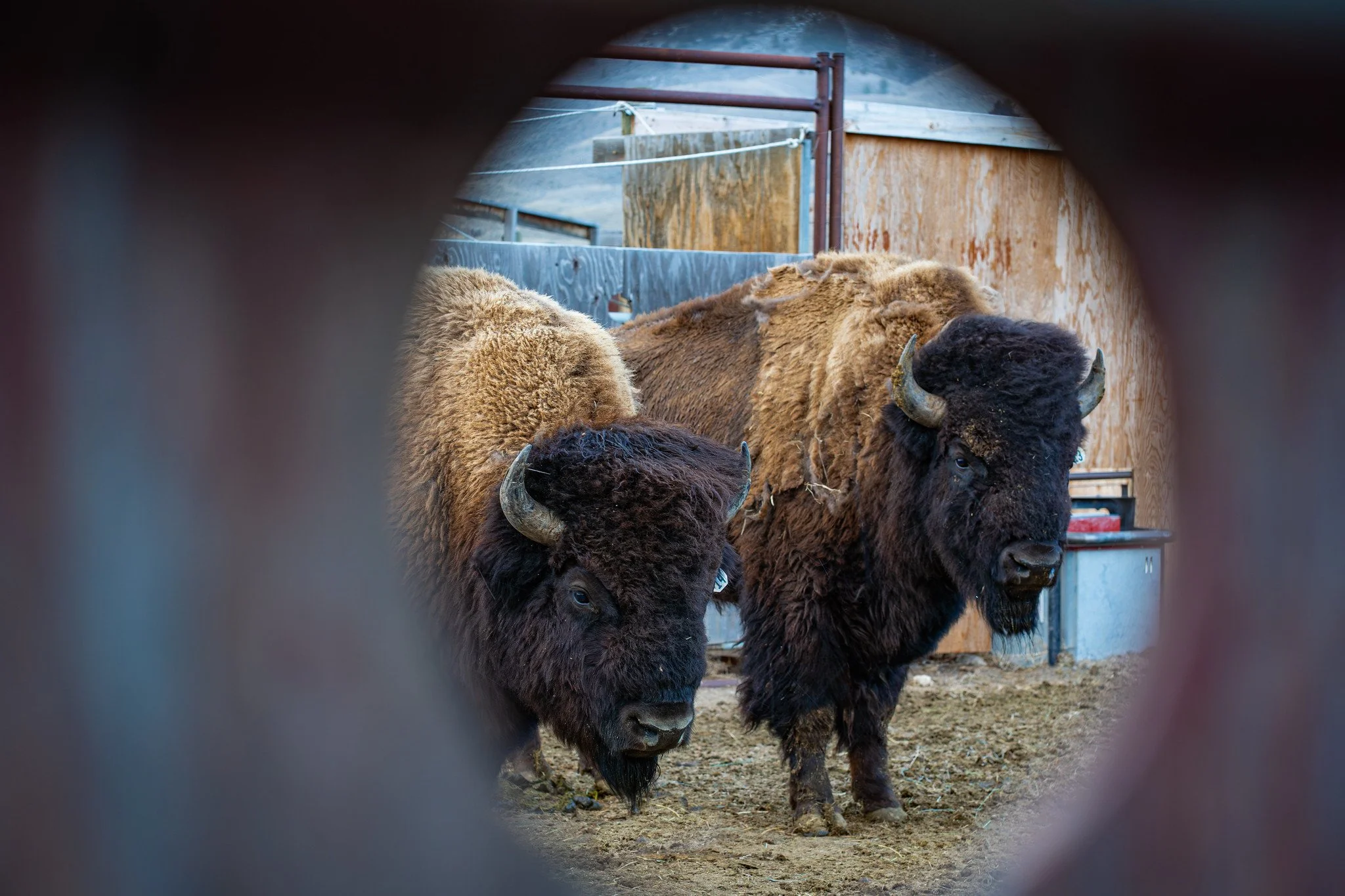
Two bull bison wait in a holding pen outside Yellowstone National Park to make the journey to the Fort Peck Indian Reservation in northeastern Montana. (Photo GYC/Emmy Reed)
The Bison Conservation Transfer Program is a critical part of meaningful bison restoration. The once vast herds that engineered the American West and supported tribes for millennia were nearly wiped out by the early 1900s. The roughly 5,000 bison roaming Yellowstone today are descendants of just two dozen individuals that found a haven in the park’s rugged interior while European settlers and the American military systematically exterminated millions of animals through market hunting with the intention of controlling the tribes that depended on the species for food, shelter, clothing, and spiritual connection.
Rehoming to Tribal Nations
To date, the Bison Conservation Transfer Program has rehomed 625 Yellowstone bison to 29 tribes in 13 states and one first nation in Canada. The tribes’ access to Yellowstone bison is not only paramount for cultural reasons, but a protected treaty right. The successful rehoming effort would not have happened without the dedication and stewardship of Fort Peck’s tribal buffalo program led by Robbie Magnan.
I spoke with Robbie after he finished morning chores on the sprawling buffalo ranch that is aptly named the “Robbie Magnan Facility.” It was -15 degrees with a biting wind that was no match for our many layers of coats. The new bison that thundered off Yellowstone’s transport trucks the night before were unfazed by the surprise blast of arctic temperatures.

The newly arrived bison from Yellowstone regroup in a holding pen on the Fort Peck Indian Reservation. In all, 213 healthy bison made the 470-mile journey from the park. (Photo GYC/Emmy Reed)
For nearly three decades, Magnan has been managing the tribes’ buffalo. Since 2018, he’s managed the animals that come from Yellowstone and then spend a year on the tribal pastures near Wolf Point, Montana before being permanently rehomed to other tribes.
Magnan grew up on the Fort Peck Indian Reservation but did not see a live buffalo until he visited the Denver Zoo when he was 10 years old.
“Buffalo had been absent for two generations, so I never really had stories to relate to until we brought buffalo back to the Fort Peck Reservation,” he said. “I’m fortunate now, I get to see what my parents and grandparents didn’t get to see, and that’s to live with the buffalo.”
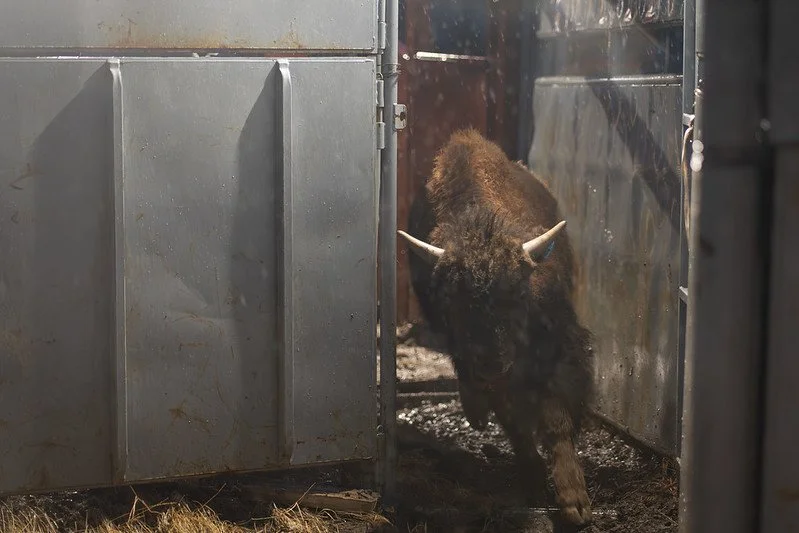
A bison exits the trailer on a cold, rainy evening at the Robbie Magnan Facility. To date, the Bison Conservation Transfer Program has rehomed 625 Yellowstone bison. (Photo GYC/Emmy Reed)
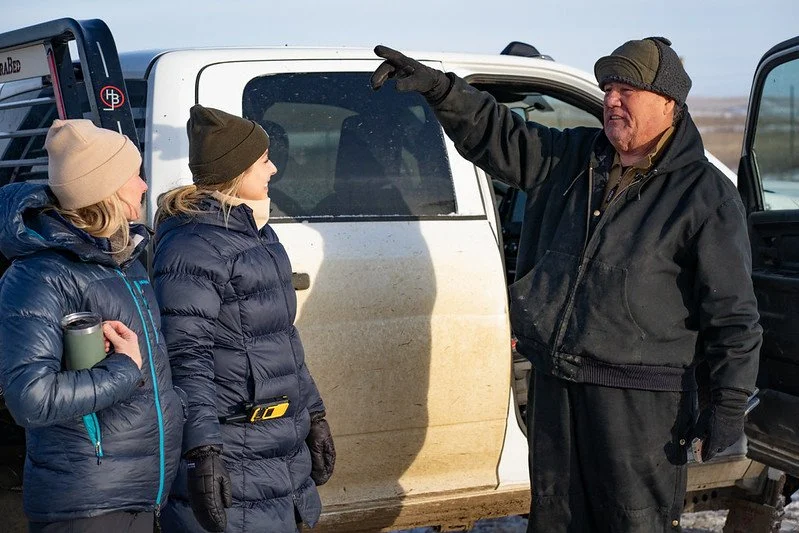
Robbie Magnan (right) gives GYC’s Wildlife Program Manager Shana Drimal (left) and Director of Communications and Marketing Emilie Ritter (middle) a tour of the facility. (Photo GYC/Emmy Reed)
Working Together
The Greater Yellowstone Coalition and its generous donors continue to support the transfer program financially. Together, we’ve been able to quadruple the capacity of the program which means even more healthy bison are being diverted from slaughter and restored to their ancestral range. From a policy lens, we continue to advocate for modern, science-based solutions that allow our national mammal to thrive.
The American bison’s story is fit for the big screen – a conservation success that continues to have positive ripple effects for tribal cultures, and the health of grasslands, including the soil, plants, and the many animals that benefit from them. And yet, the story isn’t over.
On that frozen morning standing in the middle of Fort Peck’s tribal buffalo pasture, the sun hung low on the horizon. The only sound audible was the wind and a tractor in the distance delivering supplemental hay to the animals whose thick brown fur was lightly dusted with frost. It’s easy to imagine what this land might have looked like when millions of buffalo moved across the plains like the weather.
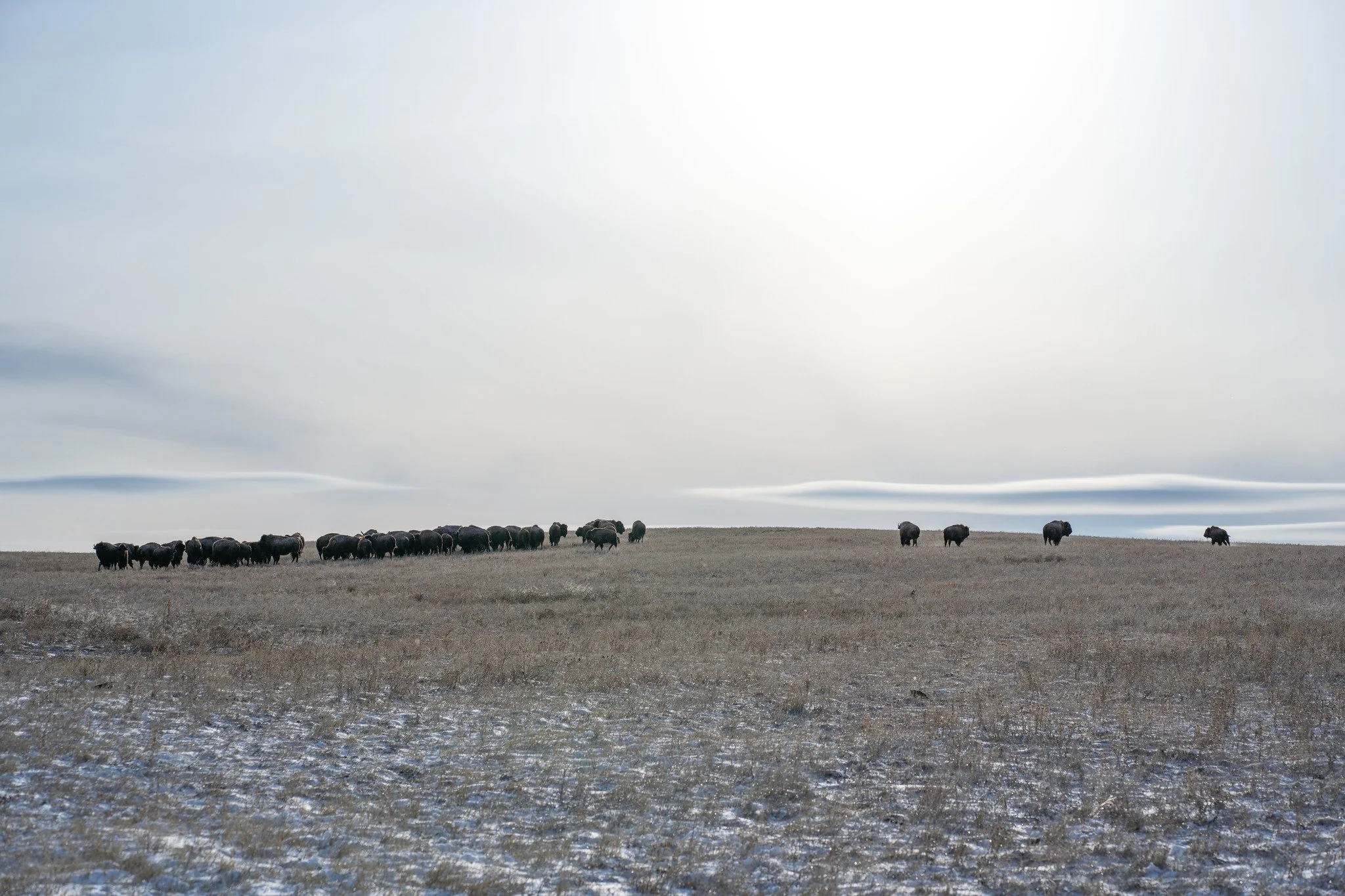
The next morning, the bison wander their new temporary home on the plains of northeastern Montana. The Bison Conservation Transfer Program is a critical part of meaningful bison restoration to their ancestral home across North America. (Photo GYC/Emmy Reed)
The story is a quiet, steady return of something that should never have been taken away. It’s a reminder that the restoration of a species is possible when people come together with a deep respect for partnership and patience.
Want to stay informed about our bison rehoming efforts? Join our online community to receive email updates and more.

—Emilie Ritter, Director of Communications and Marketing (Bozeman, MT)